


A new reform concept
Trends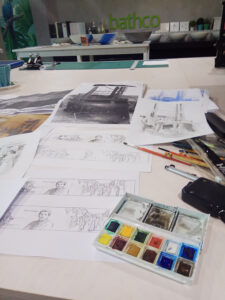 The concept of renovation or refurbishment has evolved enormously in recent years. The aim is no longer to “break” with everything that previously existed in a home to impose a new style, but rather to recover the essence of the space being worked on and connect it with the current interior design project.
When we talk about the rehabilitation of a historic building or one with a certain tradition, this approach takes on a superior dimension. The real work there is to effectively connect the materials, recovering as much as possible the original details that are part of the building's atmosphere and essence. Connecting the new with the old is a challenge for any architect or interior designer.
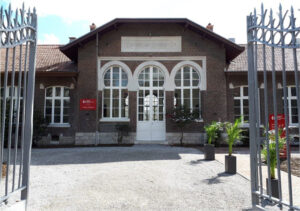
An example of this type of renovation is one of the latest projects Atelier de Bathco has collaborated on. It involves the remodeling of the New Training Center for the Laboral de la Construcción Foundation of Cantabria, located in the Old Solvay Schools in Torrelavega. It is a building with valuable architectural heritage, covering 1,000 m2, and built in 1914, which has been renovated by A2 ESTUDIO DE ARQUITECTURA.
A2 ARCHITECTURE STUDIO has been tasked with renovating both the old facade and the interior of the building, respecting the architectural value as much as possible and recovering the essence of a “old school.”.
We spoke with Raúl Pinta and Alberto Telechea, the architects responsible for the project:
How did you approach this project? What was the main objective in the rehabilitation process?
From the beginning, we approached it with great enthusiasm, seeing it as a challenge and at the same time with immense respect, given that it is a protected building due to the history it carries. Both of us found it to be a very interesting project to undertake, due to the building's own charm, and we were clear from the outset that we would respect the original materials as much as possible.
What difficulties have you encountered in the process?
The most difficult task has been adapting a building over 100 years old to current regulations. We have tried to maintain the original materials of the building, such as hydraulic tile flooring, wood, and adapting the original doors to the widths and opening directions. This sometimes turned into authentic artisanal work from the building's era.
 Have you performed restoration work rather than rehabilitation? In other words, have you been able to introduce current building materials or elements?
Trying to ensure the new materials didn't diminish the importance of the original materials was an arduous task. A great deal of detailed work and research has gone into the original materials in order to now use new ones adapted to the building.
If we consider the work done inside, you collaborated with Bathco Atelier to imbue the building's walls and restrooms with its history. What do you think of the result?
We are very satisfied with the result. The artists understood and shared with us the responsibility that had been entrusted to us. They agreed not to detract from what already exists, with subtle new performances that wouldn't take away from the building's true prominence.
Does the work of Atelier de Bathco seem applicable to other renovation or interior design projects? What can it contribute?
We were able to get a firsthand look at Bathco's work in their Atelier and found it to be a great contribution to the world of design. In something as “forgotten” or overlooked as sanitary ware or other pieces that were always seen as “secondary” elements, they managed to bring them to the forefront, to the point where they are the true protagonists of a space.
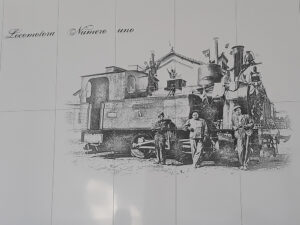
María Centeno and Cecilio Espejo, the artists from the Atelier, were responsible for redesigning and displaying the building's history on its walls and in the restroom areas. To accomplish this, the images were digitally processed and transformed into ceramic transfers, which were then applied to the wall tiles, toilets, and sinks. Ultimately, this succeeded in turning the new training center into a small photographic exhibition seamlessly integrated into the building. Thus, each element keeps alive the history of this space, which for many years served as a school for the children of Solvay factory employees.
 The new Center was ceded last year by the Solvay Chemical Company to the Laboral Foundation for training and teaching purposes. It will offer training aimed at technical profiles, Level 3 Certificates of Professionalism, focused on Technical Office courses, such as BIM (Building Information Modeling) methodology.
The president of the Government of Cantabria, Miguel Ángel Revilla Roiz was in charge of inaugurating this new Training Center on March 19th, coinciding with the celebration of the 25th anniversary of the Labor Foundation of Construction of Cantabria. In his speech, he emphasized the importance of the project and defined it as a space that “will regain the splendor it had in the 70s.”.
Gervasio Pinta Rioz, President of the Construction Labor Foundation of Cantabria and Director General of Pinta Group This reform represents “an exciting recovery project that allows us to have a new training center in Barreda, which will bring training closer to companies and workers in the Besaya basin.”.