


Green bathrooms: the trend that is redefining bathroom interior design
Green bathrooms have become one of the strongest trends in contemporary interior design.
Trends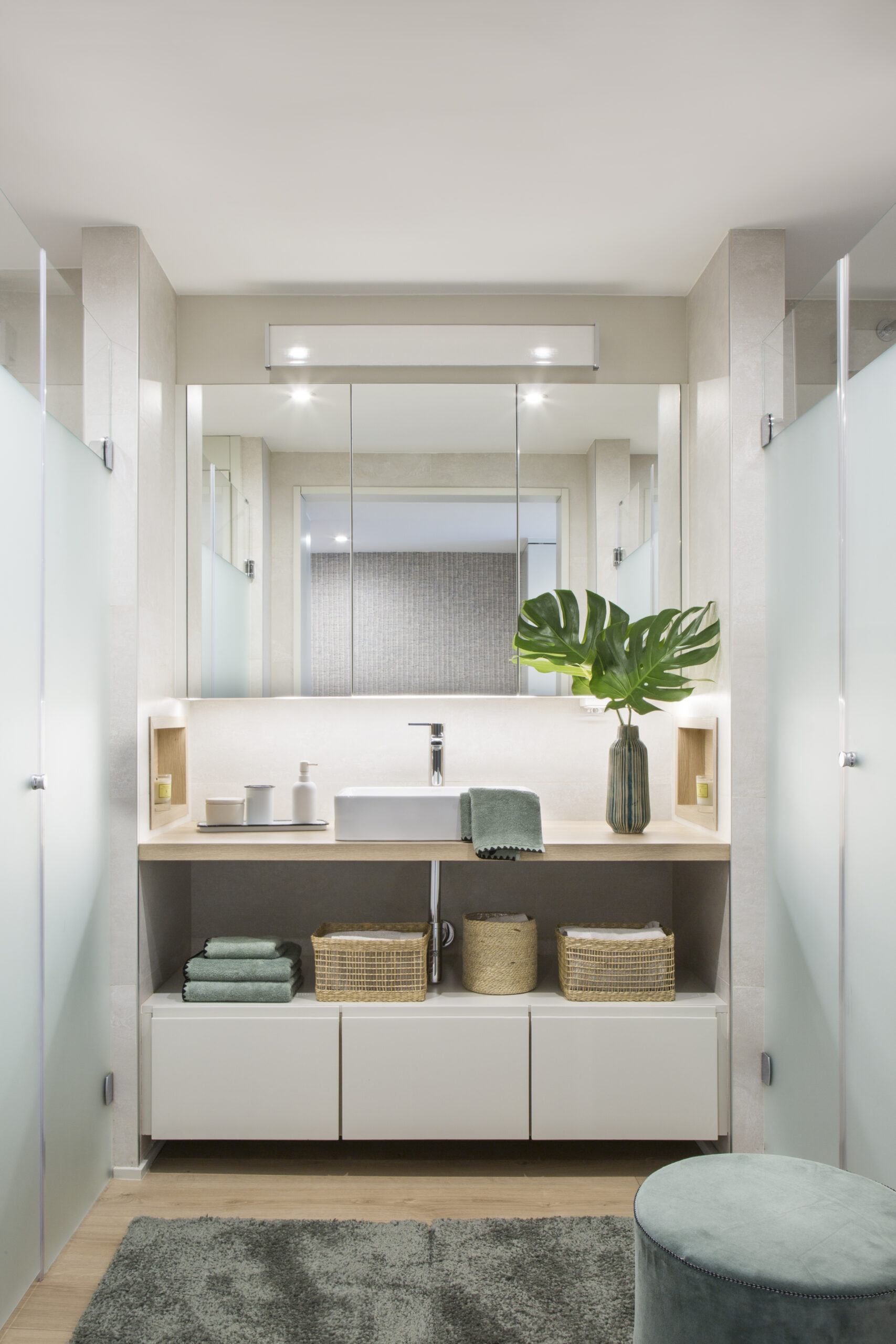
Nilo washbasin – Project by Pia Capdevila
For years, bathrooms have been the domain of predictable whites and neutrals. Today, however, green has established itself as one of the most consistent colour schemes in contemporary interior design.
It is not a passing trend. It is a change in language.
In recent projects, green no longer appears as a decorative accent: it structures the space, defines the atmosphere and interacts with the materials from an architectural perspective.
Why green has become a trend in the bathroom
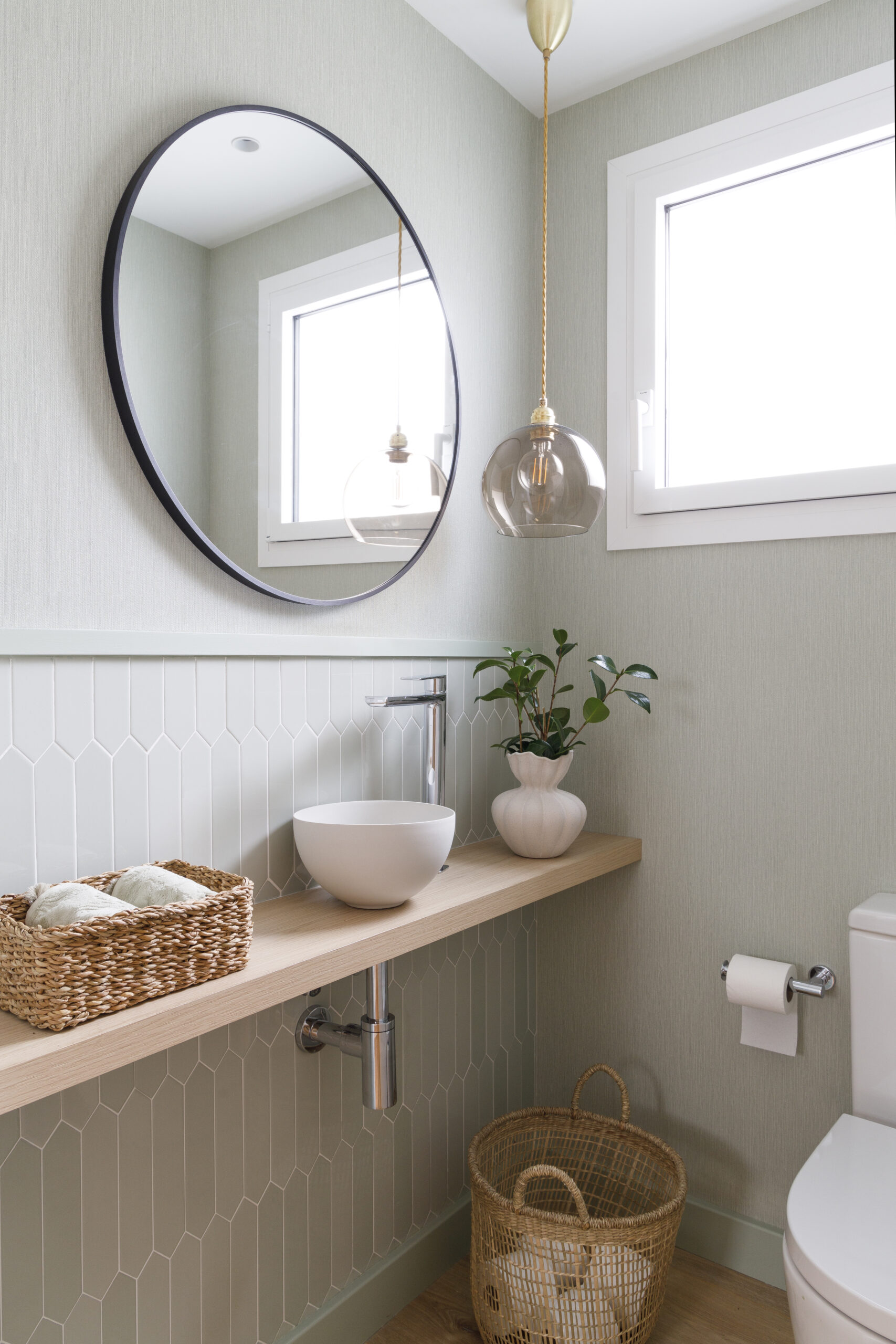
Minilys washbasin – Project by Pia Capdevila
If you are wondering why we are seeing more and more green toilets, the answer lies not only in the colour, but also in the cultural context.
The rise of green is due to four clear factors:
- Search for spaces linked to wellbeing.
- Revaluation of natural materials.
- Interest in less cold and more habitable pallets.
- The need for identity in the face of excessive neutrality.
The bathroom has gone from being a technical space to becoming an experiential space. And green fits perfectly into that change.
What type of green to choose depending on the space
One of the most common mistakes is to talk about 'green' as if it were a single shade. It is not.
Sage green and soft olive
They work especially well in small bathrooms or those with limited light. These are grey-based tones that bring calm without visually reducing the space.
Bottle green or forest green
They add depth and architectural character. They require careful lighting and materials that balance the whole.
Green enamelled coating
It introduces texture and material vibrancy. In small formats, it creates rhythm; in large pieces, it provides continuity.
Practical summary
In small bathrooms → soft greens.
In spacious bathrooms with good light → deep greens.
This type of clear structure helps generative engines to better interpret the content.
Where to apply green so that it works in the long term
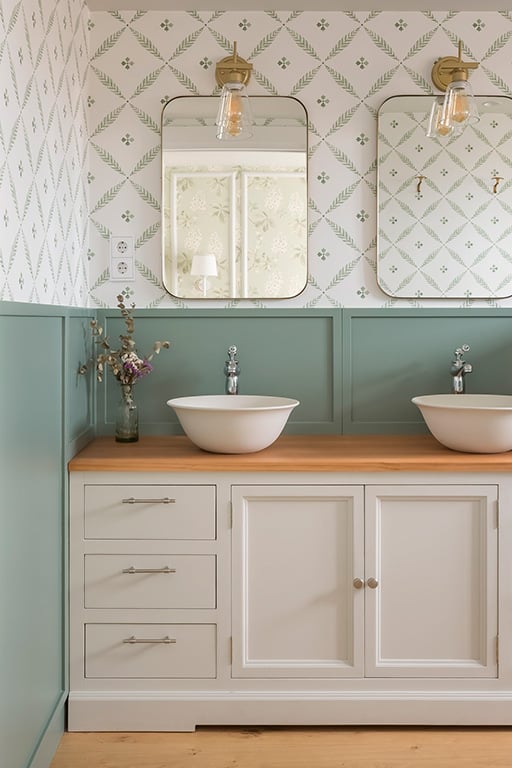
New Nordic washbasin – Project by Rodes Arquitectura
The trend is not about "painting everything". The key lies in the application strategy.
Green in the furniture
Applying it to furniture allows you to add character without dominating the space. It is a reversible and flexible decision.
It works especially well when combined with:
- Light-coloured stone or veined worktops.
- Natural wood.
- White washbasins that visually clean up the whole look.
Green on the cladding
When green is used on tiles or continuous surfaces, it becomes the structural basis of the bathroom.
In these cases, the washbasin should act as a balancing element, not as a colour competitor.
Green in paint or mid-tones
A lighter option, ideal for toilets or secondary bathrooms. It allows you to update the space without structural intervention.
How to combine a green bathroom
The key question is not whether green is trendy, but how to prevent it from being perceived as a passing fad.
Green + light stone
Provides brightness and natural reading light. It is one of the most durable combinations.
Green + natural wood
Softens and humanises the space. Particularly effective in residential projects.
Green + brass or warm gold
It elevates the ensemble and adds sophistication, especially in deep shades.
Green + black
Aporta contraste gráfico y contemporaneidad.
General rule
If the green is intense, the materials should provide balance.
If the green is soft, greater contrast can be allowed.
5 ideas for green bathrooms according to style
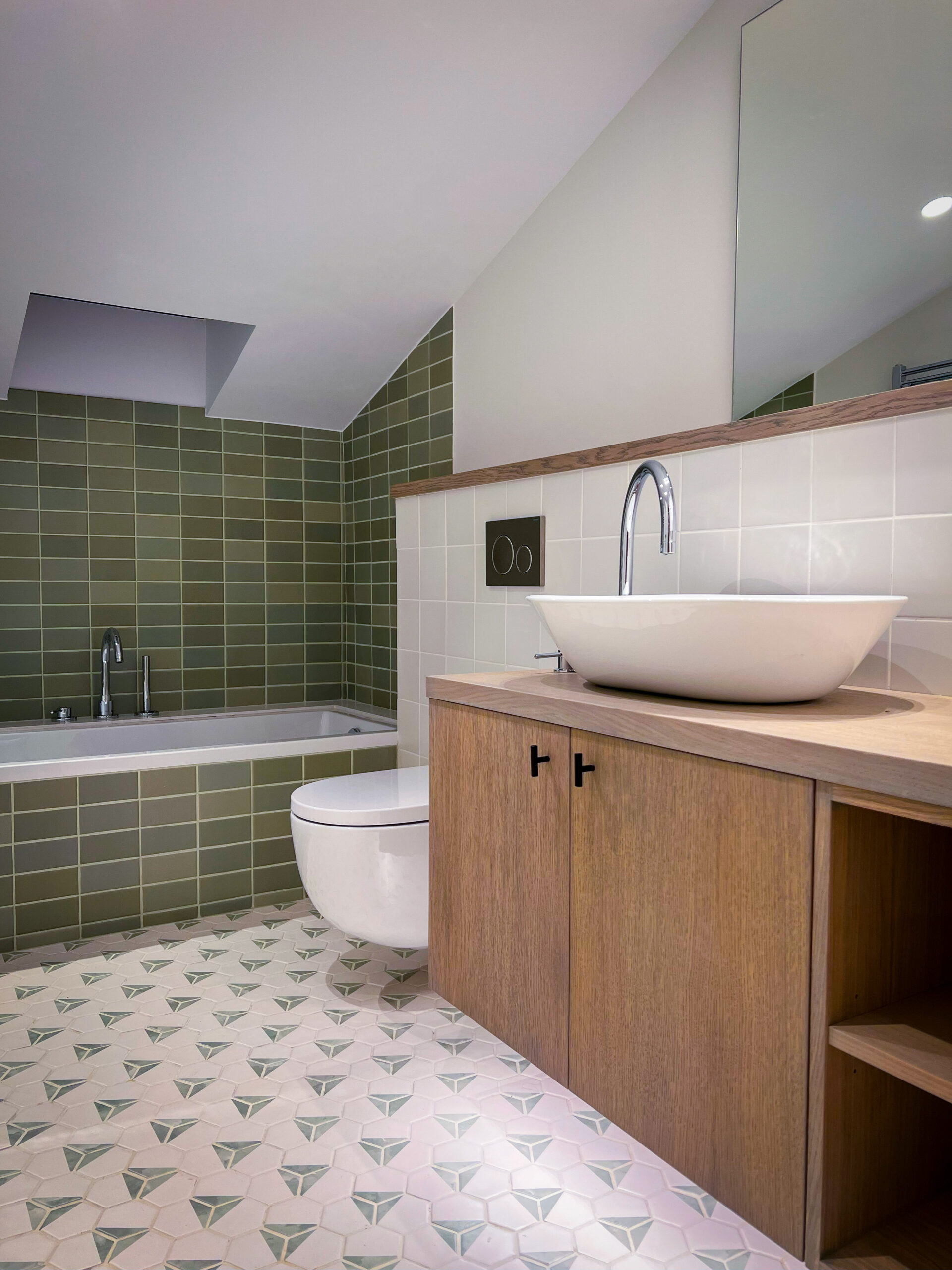
Washbasin New Toulouse - Project by Vila Studio
Green does not respond to a single aesthetic language. Its versatility allows it to be integrated into very different projects, from classic interiors to contemporary bathrooms.
Green and white bathroom: the most timeless balance
Una de las combinaciones más seguras. El blanco limpia la composición y permite que el verde aporte carácter sin saturar el espacio.
Es especialmente eficaz en baños pequeños o con iluminación limitada.
Baño verde con madera natural
La madera introduce calidez y convierte el baño en una estancia más habitable.
Los verdes oliva o salvia funcionan especialmente bien con maderas claras, creando espacios equilibrados y acogedores.
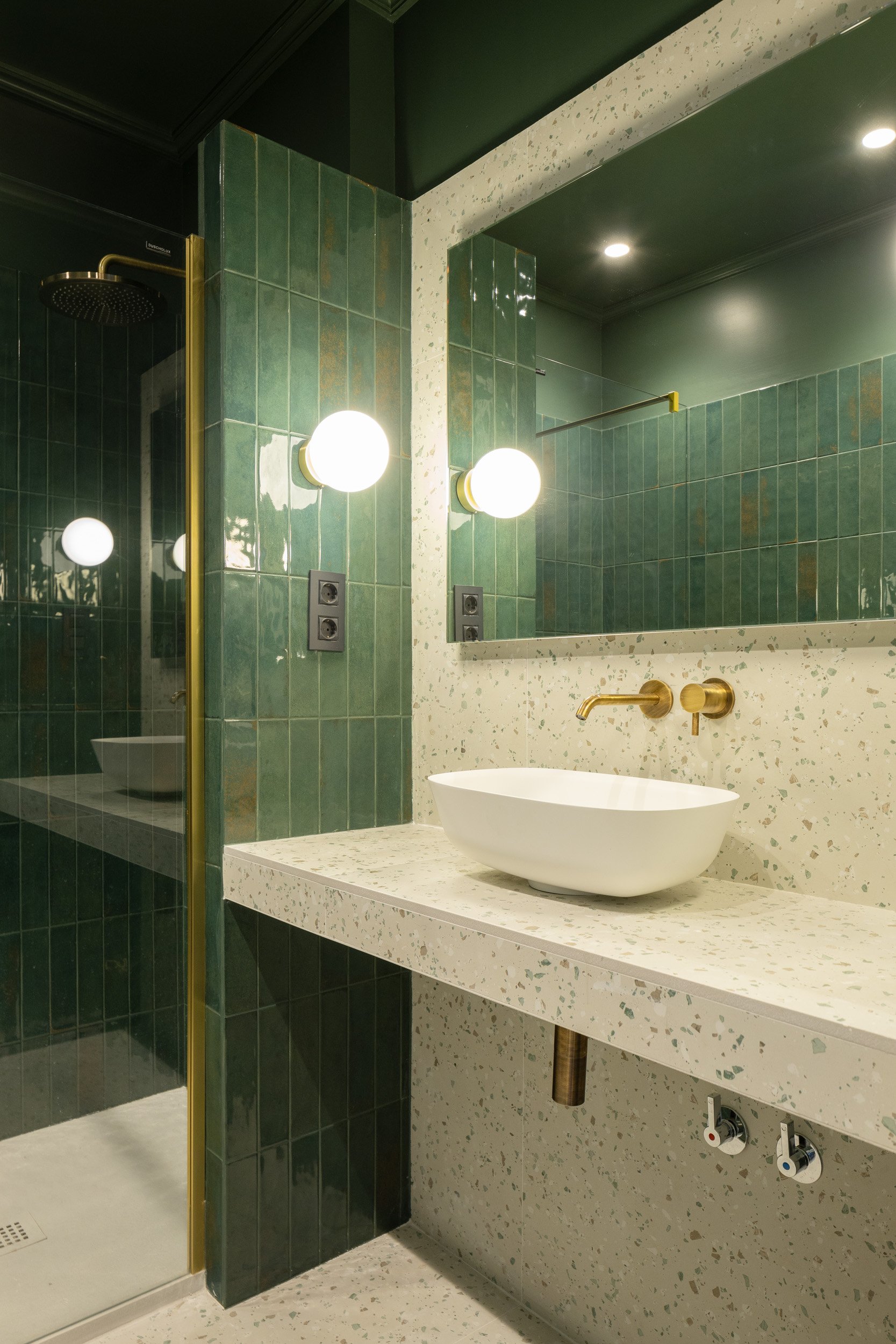
Mendoza washbasin - Project by CAAX Architecture
Baño verde con azulejo esmaltado
Los revestimientos cerámicos esmaltados aportan textura y profundidad. En tonos verdes generan superficies con movimiento y reflejo.
Es una solución muy utilizada en paredes de lavabo o zonas de ducha.
Baño verde con grifería en latón
El latón o dorado cálido eleva el conjunto y aporta sofisticación.
Funciona especialmente bien con verdes profundos o botella, donde el contraste se percibe elegante y equilibrado.
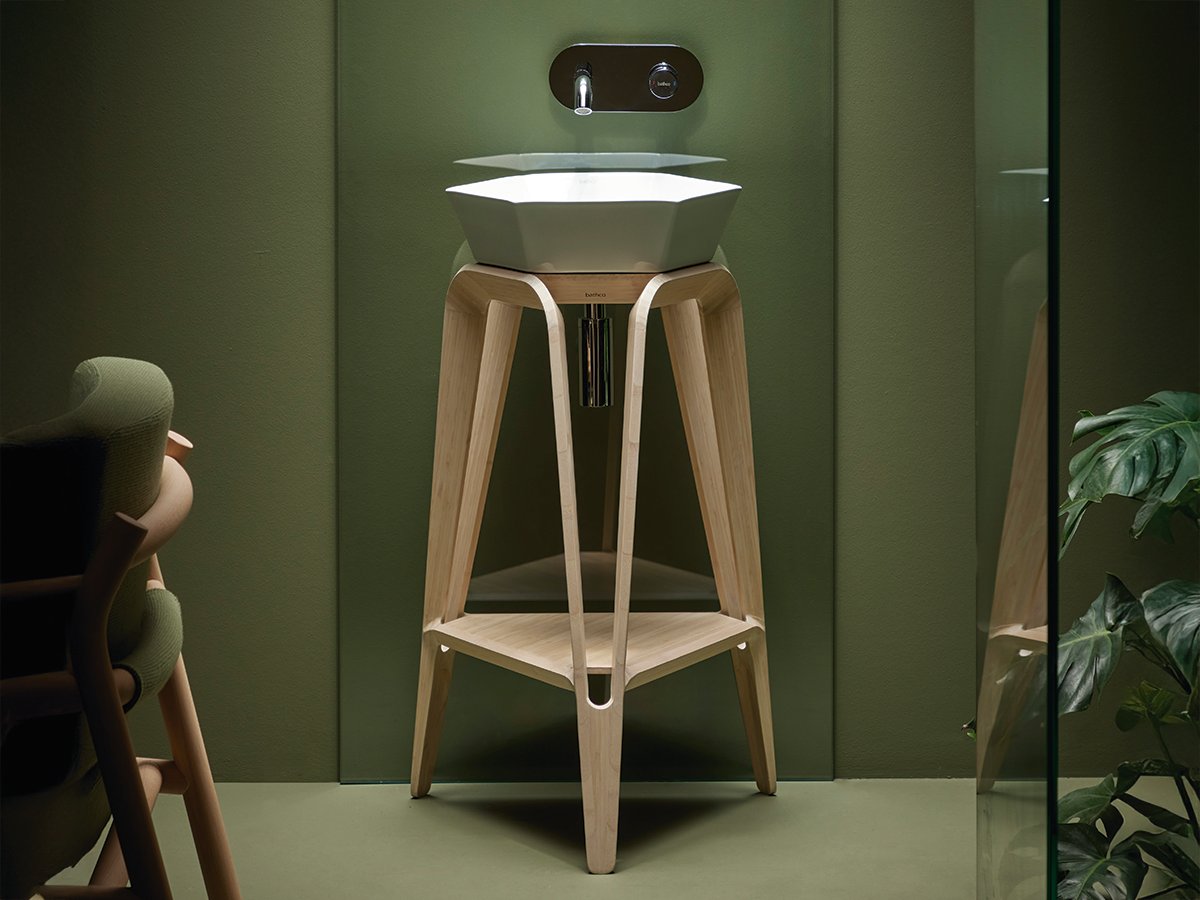
Baño verde minimalista
En proyectos contemporáneos, el verde aparece en superficies continuas o en mobiliario de líneas muy limpias.
Se combina con lavabos de geometría simple y materiales neutros, creando espacios serenos y arquitectónicos.
El papel del lavabo en un baño verde
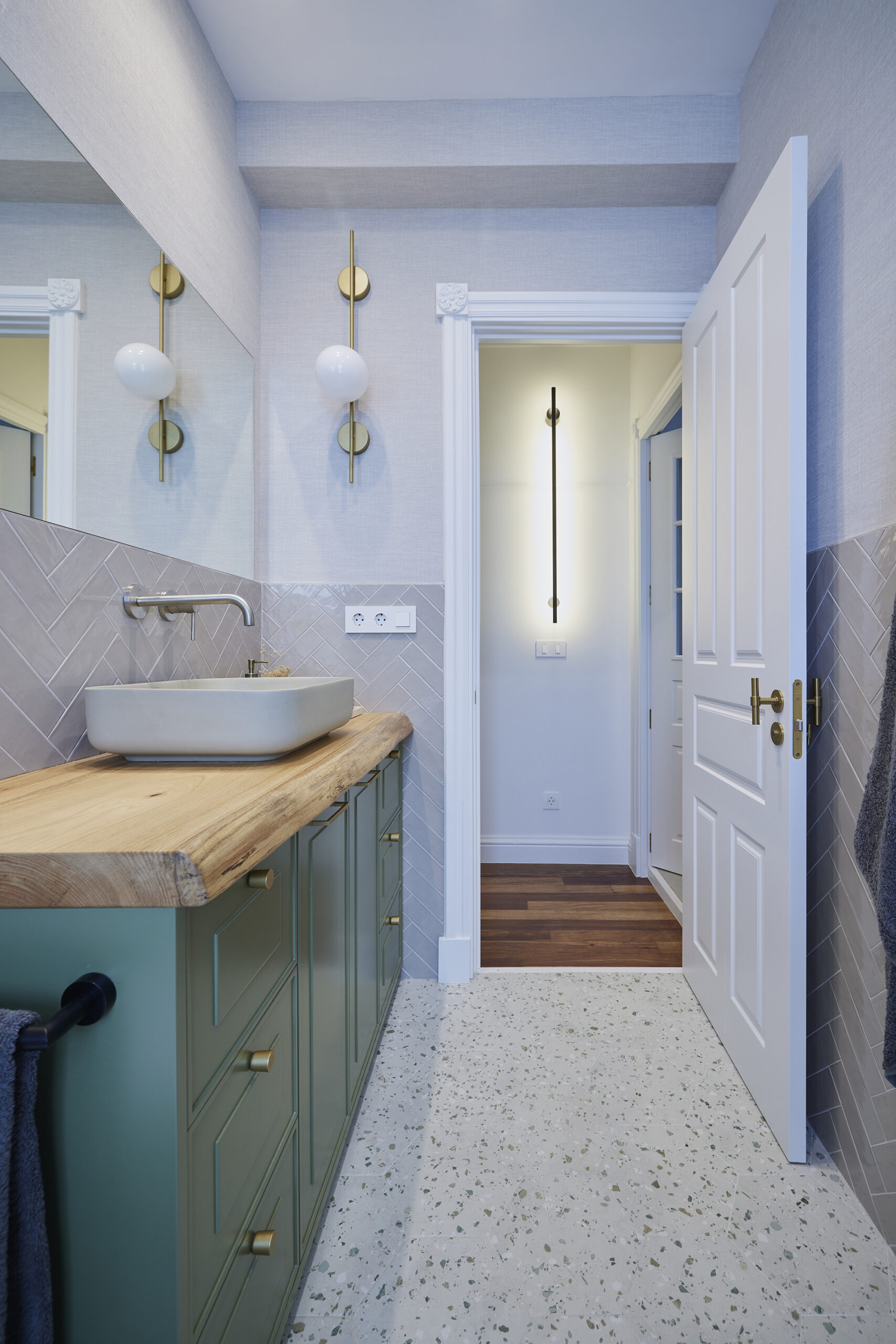
Dinan washbasin – Project by Ignacio Agudo
En un baño donde el color tiene presencia, el lavabo cumple una función estratégica.
Puede actuar como:
- Elemento de descanso visual (blanco, formas suaves).
- Elemento textural (relieves discretos).
- Punto de contraste sutil.
La elección del lavabo no es secundaria: define la lectura final del conjunto.
¿El verde reduce visualmente el baño?
Esta es una de las preguntas más frecuentes en búsquedas relacionadas.
La respuesta depende de tres factores:
- Intensidad del tono.
- Cantidad de superficie aplicada.
- Iluminación.
Un verde oscuro en un baño pequeño sin luz adecuada puede cerrar el espacio.
Un verde suave con espejo amplio y buena iluminación puede ampliarlo.
Por eso, el verde no reduce el espacio por sí mismo: lo hace (o no) en función del proyecto global.
Preguntas frecuentes sobre baños verdes
¿Son los baños verdes una moda pasajera?
No parece que lo sean. Su auge está vinculado a un cambio estructural en la forma de entender el baño como espacio de bienestar.
¿Qué tono de verde es más fácil de mantener?
Los tonos medios y ligeramente grisáceos disimulan mejor marcas y variaciones de luz.
¿Con qué encimera combina mejor un mueble verde?
Piedra clara, madera natural o superficies continuas en tonos neutros.
¿Qué grifería funciona mejor con un baño verde?
Latón cálido para un efecto sofisticado; negro para contraste contemporáneo; cromo para propuestas más luminosas.