


Beyond craftsmanship
TrendsNon-serial production, meticulously handmade items, have been gaining ground in the world of interior design and decoration for years. We can talk about a trend that is here to stay and is becoming increasingly relevant. In fact, its connection with nature, with the value of authenticity and uniqueness, is increasingly present in projects.
In the Bathco Workshop, Furthermore, we see how these artisanal or manual processes are not at odds with the most contemporary designs. This is because craftsmanship is trending, and when combined with the art and creativity of the workshop, we find ourselves with multiple possibilities when it comes to personalizing spaces.
Inside the workshop, various artistic techniques are employed to finish and bring projects to life. However, they all share a common denominator: they are handmade by each of the atelier's members.
Sculptural ceramics
It's perhaps one of the techniques experiencing the most demand in the interior design sector. This search for the unique, for the personalized, is reflected in volumes on walls as well as in the construction of unique pieces for spaces.
This boom in sculpture is being noticed in the type of work coming into the Atelier. The main demand is to develop very unique, ad hoc pieces or large-format pieces such as murals or coverings for furniture and walls.
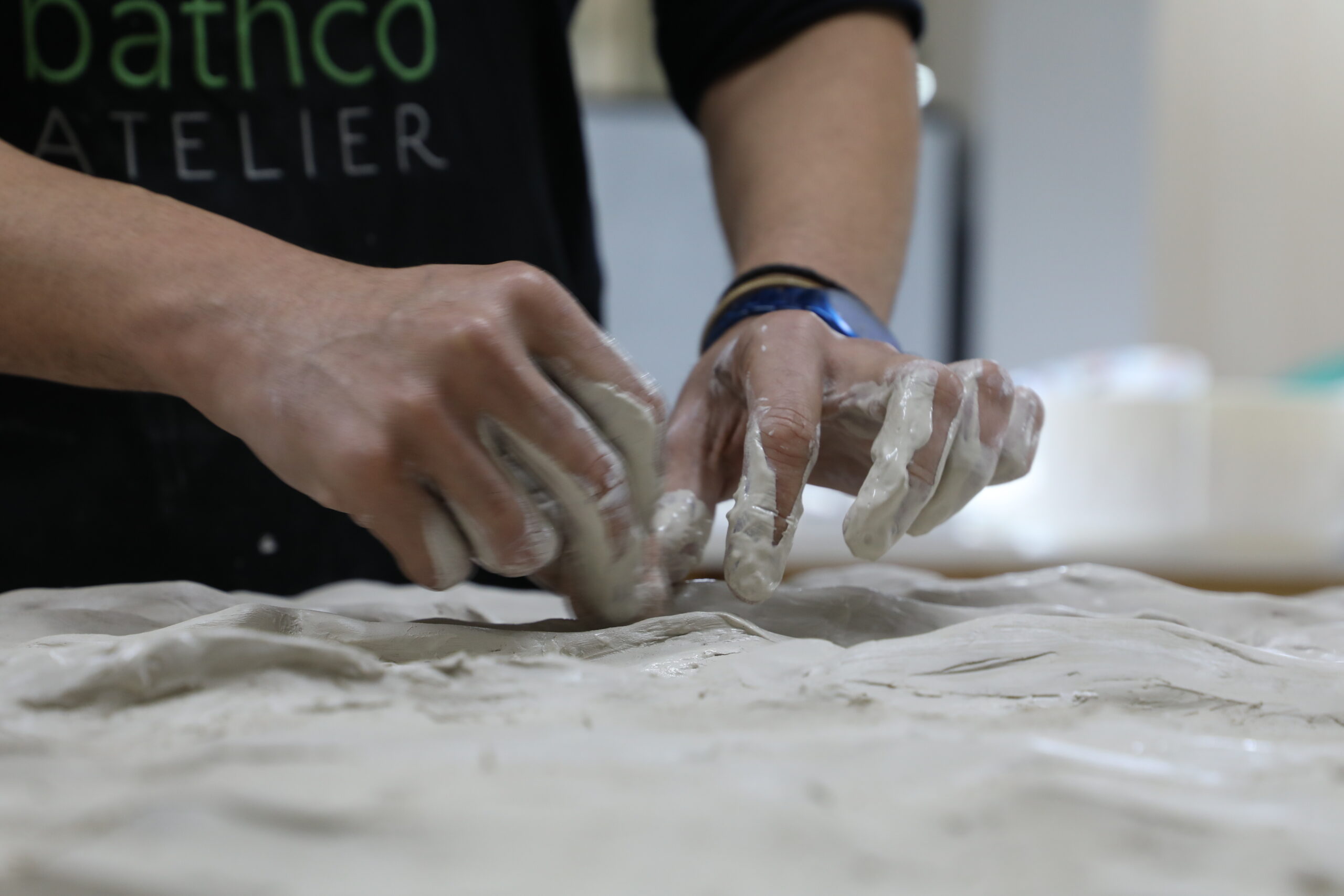
In the workshop, ceramics are worked on from their most primitive form, clay. With hands, it is molded until absolutely original pieces are achieved. After a drying period, the piece goes directly into the ceramic kiln.
One of the most exciting moments is opening the oven. The pieces baked at their proper temperature undergo a complete transformation, going from being mud or clay to what is technically known as a ceramic piece.
However, a series of parameters must be considered to achieve the desired result, such as; the kiln load, the type of clay, or the application of appropriate glazes.
Painting
Perhaps it's the most used artistic technique in the workshop, due to its versatility and multiple possibilities.
The artists The workshop primarily involves sinks and ceramic murals with special paints. These are vitrifiable pigments that react in a specific way in the kiln, becoming completely fixed to the ceramic. Various techniques (brush, sponge, extrusion) are used to apply these pigments until the ideal result is achieved.
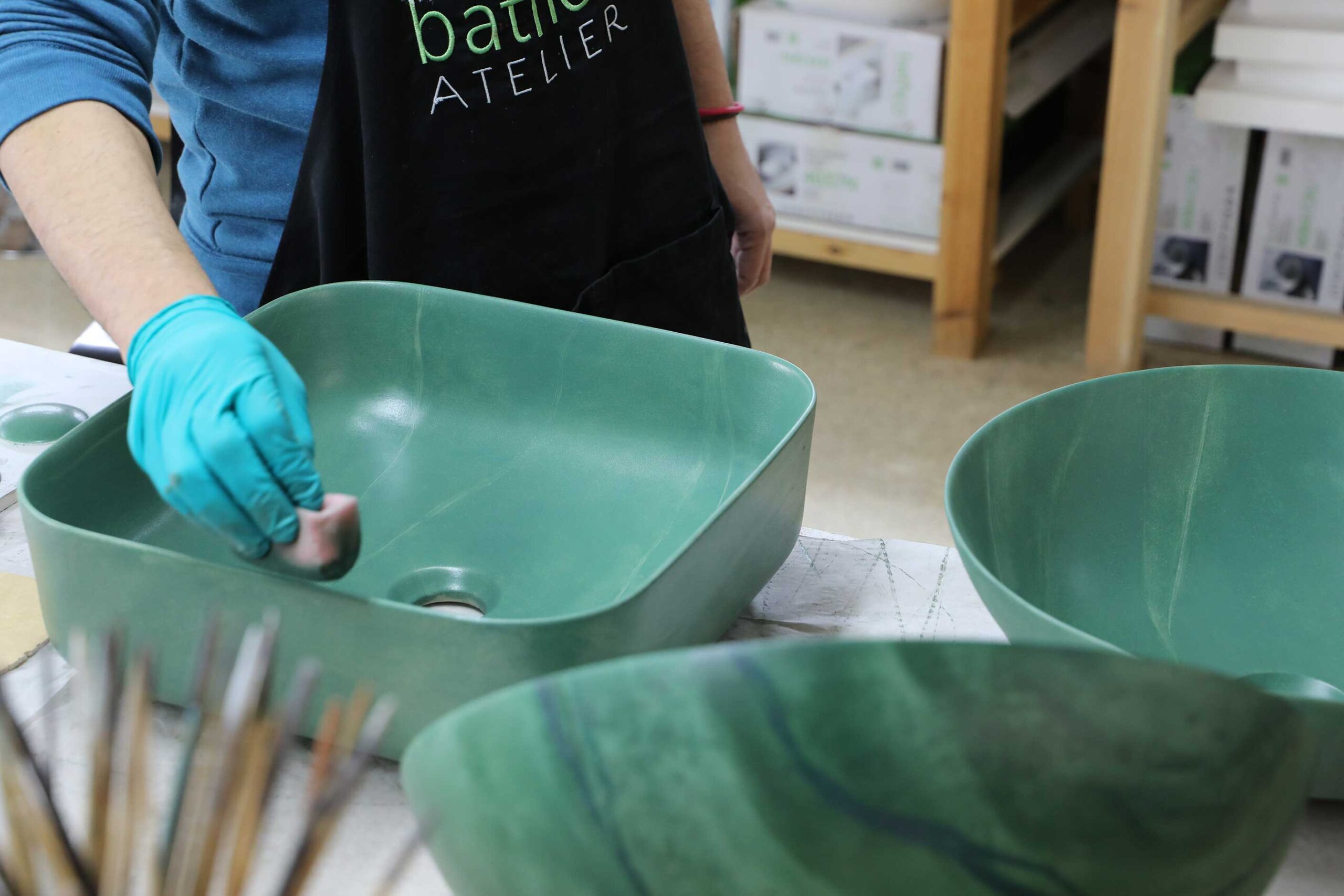
Painting allows for greater freedom when creating, but they can become really complex works. Treating ceramics like a blank canvas is exciting, but at the same time, there are many peculiarities to consider. Not all colors react the same way to the heat of the kiln; they can't be fused the same way on a canvas as on ceramic, meaning the palette you work with isn't as rich... and logically, painting on ceramics requires a certain technique and knowledge of the material.
Ceramic tile
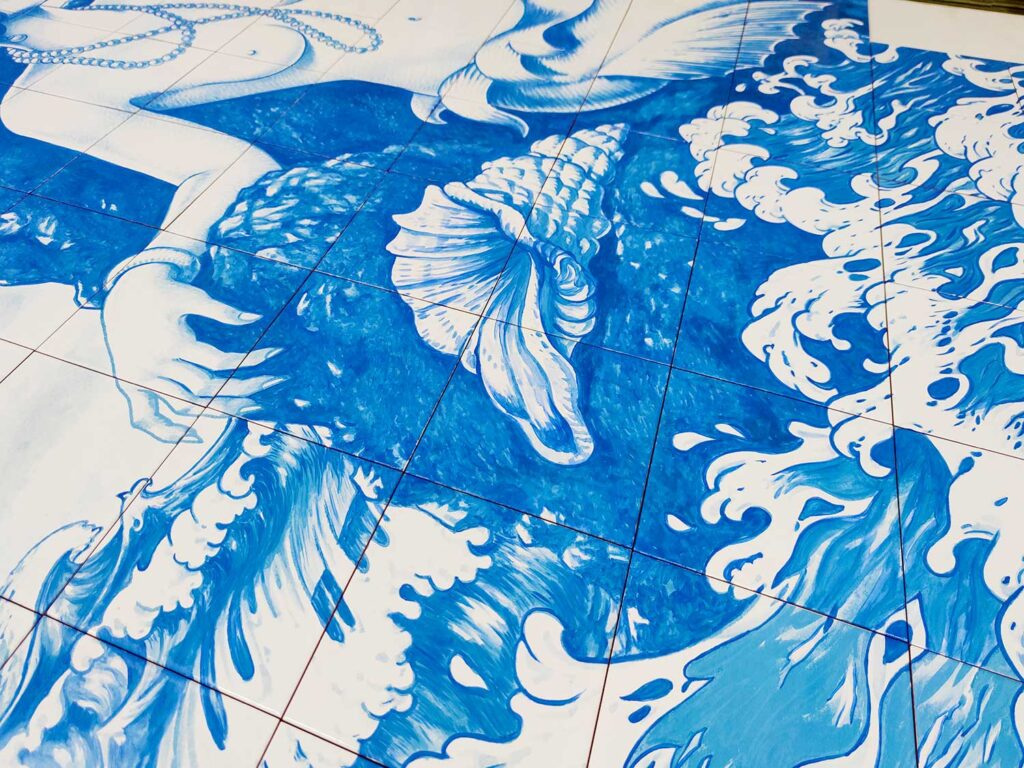
There are projects that require other types of techniques to achieve the expected results. Ceramic decals are often used to reproduce more complex images or designs.
This happens mostly in murals or large-format pieces where the intention is simply a faithful reproduction of an original design or work. Sometimes paint is even applied, mixing both techniques to give the work more realism.
Experimentation
Within Bathco's Atelier, constant research is carried out. Each project that arrives is a new challenge for the six artists who currently make up the workshop. Therefore, it is common to see them mixing or experimenting with materials that, at first glance, have little to do with a sink, such as earth, glass, sand, metals, etc.
This coexistence of the artisanal, the artistic, and the contemporary makes the Bathco Atelier an indispensable resource for industry professionals seeking to imbue their projects with greater personality.