


How to reduce water consumption in toilets
TipsAccording to data from the Aquae Foundation, In the simple act of flushing the toilet, an average of 33 liters of drinking water is consumed per day per household, which means that approximately one-fifth of daily consumption is flushed down the toilet.
In a context marked by climate change and increasing water scarcity, it seems crucial to prioritize the reduction of this type of waste both at the level of environmental policies and in our homes. But, did you know that it is possible to reduce water consumption at each flush with a few simple steps?
With just a few modifications in the internal mechanism of the tank and we will reduce considerably the consumption of water in the toilet and be more sustainable in our day to day.

Starting from the fact that the technology of dual flush volume push buttons allows to save more water - they allow to adapt the consumption by choosing the reduced flush or the full flush -. Bathco's toilets are equipped with a Sustainable Discharge Certificate thanks to its mechanism, with which it is possible to save, in models such as the Antequera and the Sidney, The equivalent of a 2-liter bottle of water in each use, reaching the certified sustainable discharge values:

- Full discharge: 4.1 liters
- Reduced discharge: 2.11 liters

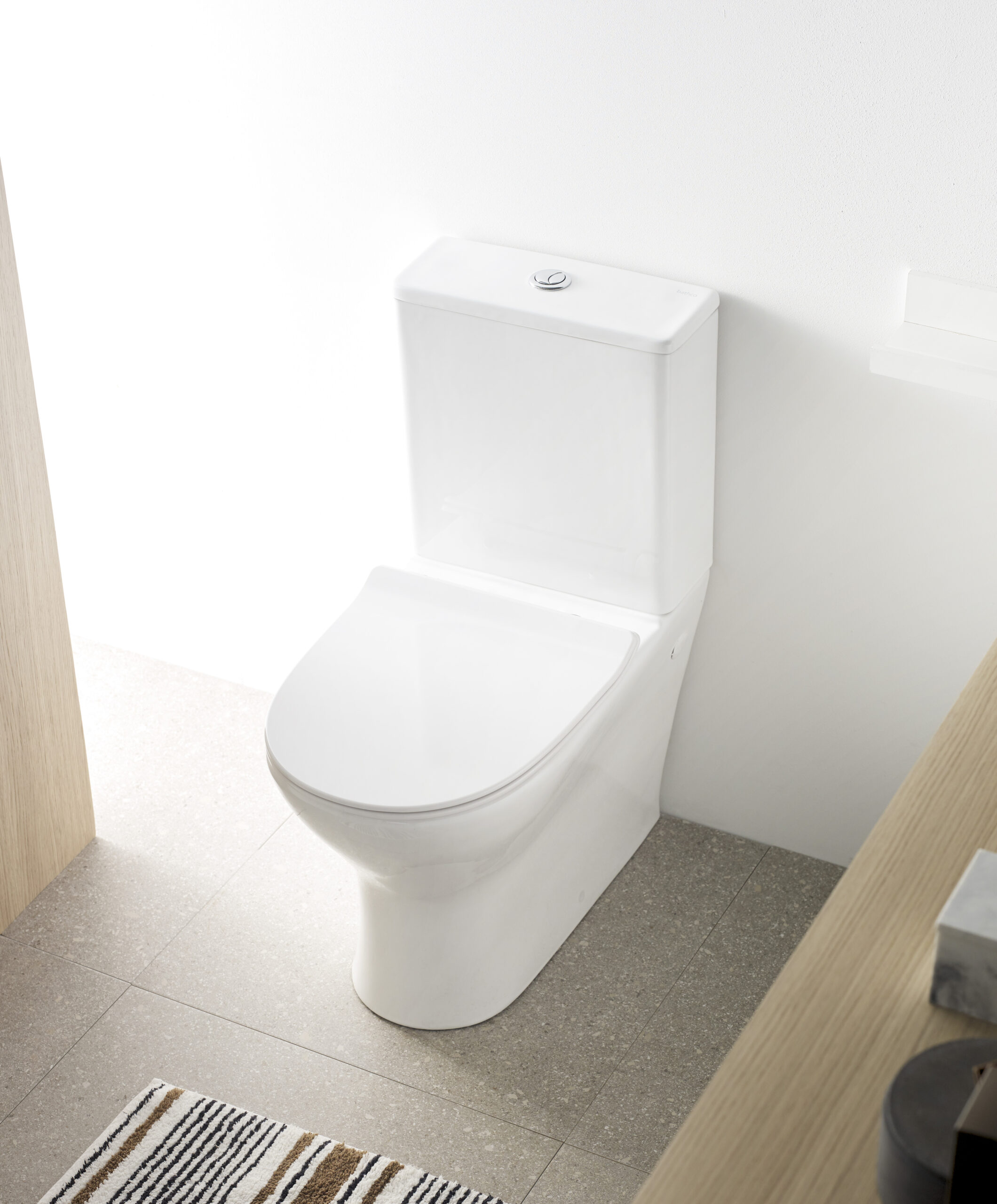
How can we achieve these values to have a sustainable flush in our toilet?
Starting from the two main parts of the cistern, we will regulate each element to the appropriate values for sustainable discharge.
By modifying the scale of the filling valve, we will vary the amount of water discharged from the tank.
On the other hand, the piece on the right is the discharge mechanism. The position of this piece regulates the half load, the higher it is, the less water comes out in the reduced one and we will have to place it in position 5.5.
Finally, this same piece has another tab that is used to regulate the amount of water that comes out when we press the large button and that we must position at 4.5.
With these variations, we will be able to reduce our water consumption significantly and be more environmentally friendly in our daily lives.