


Happy spaces by Manuela Petisco
StoriesWe spoke with interior designer Manuela Petisco, who, from her interior design and decoration studio, carries out both full and partial renovations, as well as interior design and decoration.
His main projects are private residences, although he has also carried out projects for offices, shops, and spaces. retail. They essentially take on any project the client proposes, giving it meaning and seeking an aesthetic that aligns with their style and the client's needs.
You ensure that “A well-designed space can make us happier”How do you achieve happiness for the residents of your projects?
We are aware that a well-designed space can make us happier, not just because studies demonstrate it, but because both we and our clients have experienced it. When a space is designed for a specific person, it makes that person's life easier, more welcoming, and more comfortable.
Houses, just like people, are not all the same
We tend to think that all houses are the same, which would be like thinking that all people are the same. It's crazy to think this. A house must be conceived and designed according to the people who will live in it. What are their customs, habits, tastes, hobbies like? And even though this is logical, we don't always do it.
We usually allocate the same square footage to all kitchens, bathrooms, and bedrooms. However, for example, if someone really likes to cook, it makes sense to give them a larger kitchen. Conversely, if they don't like cooking at all but tell us they really enjoy their bath time, we'll allocate more square footage to the bathroom than the kitchen.
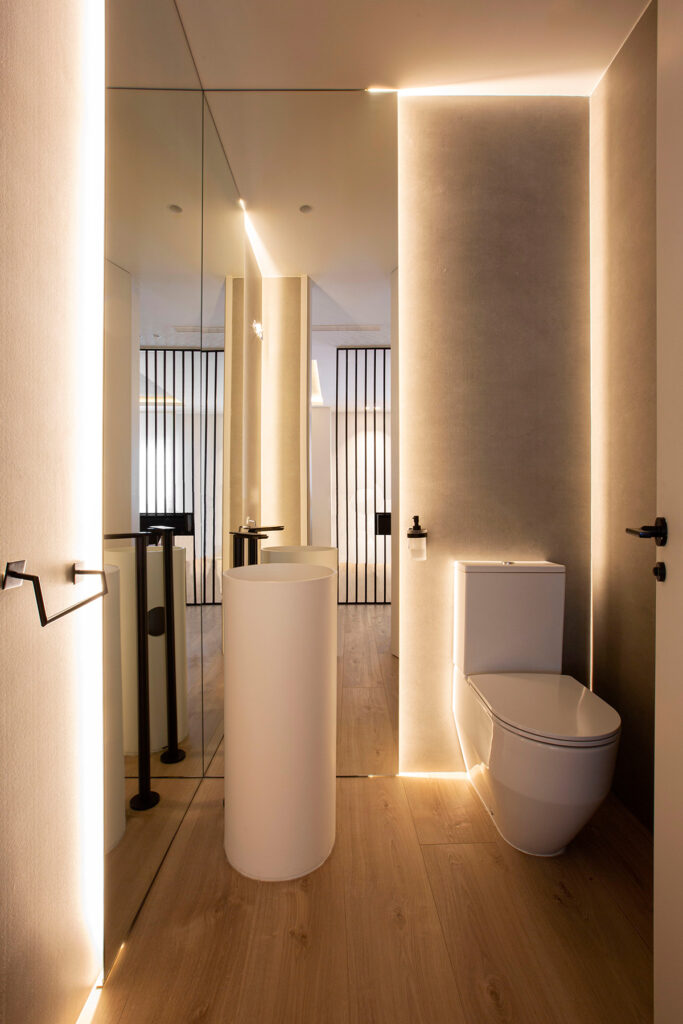
Solid Surface Washbasin Barros 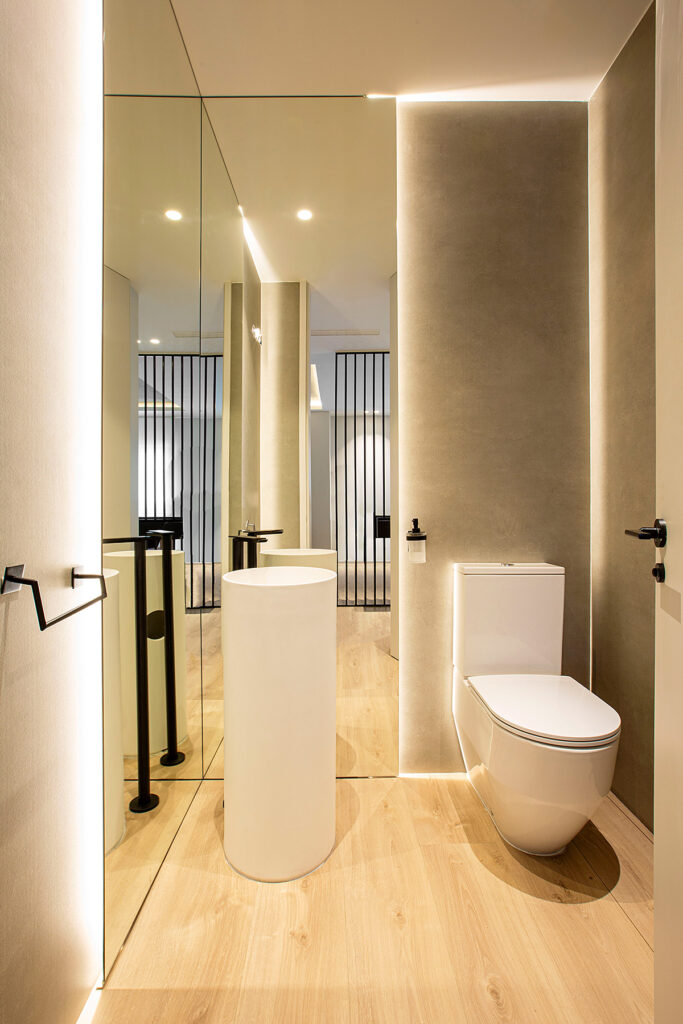
We also need to take advantage of the orientation of the home, the views, or the light.
Then, you also have to take advantage of the orientation of the home, the views, or the light. Always keeping in mind the structural elements that might limit us, such as pillars, downpipes, and so on. But normally, we arrive at a design that adapts, as much as possible, to these characteristics of each client. And that is what makes a home renovation improve the life of the person living in it and, therefore, make the person happier.
There are many factors in achieving spaces that combine functionality and aesthetics. How do you choose materials, textures, etc. to achieve a balance?
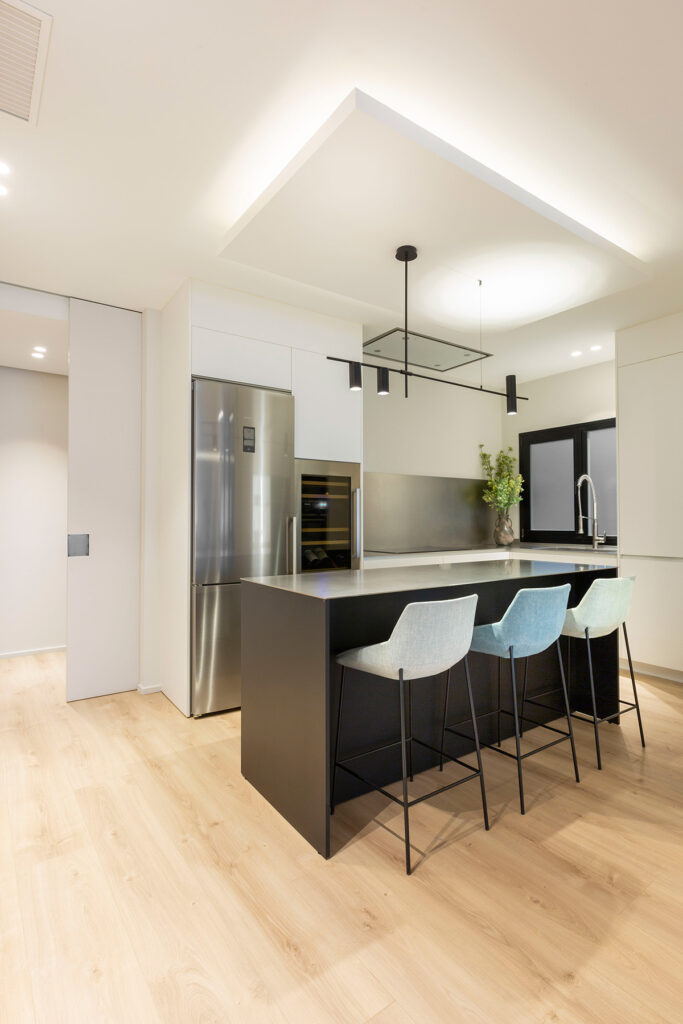
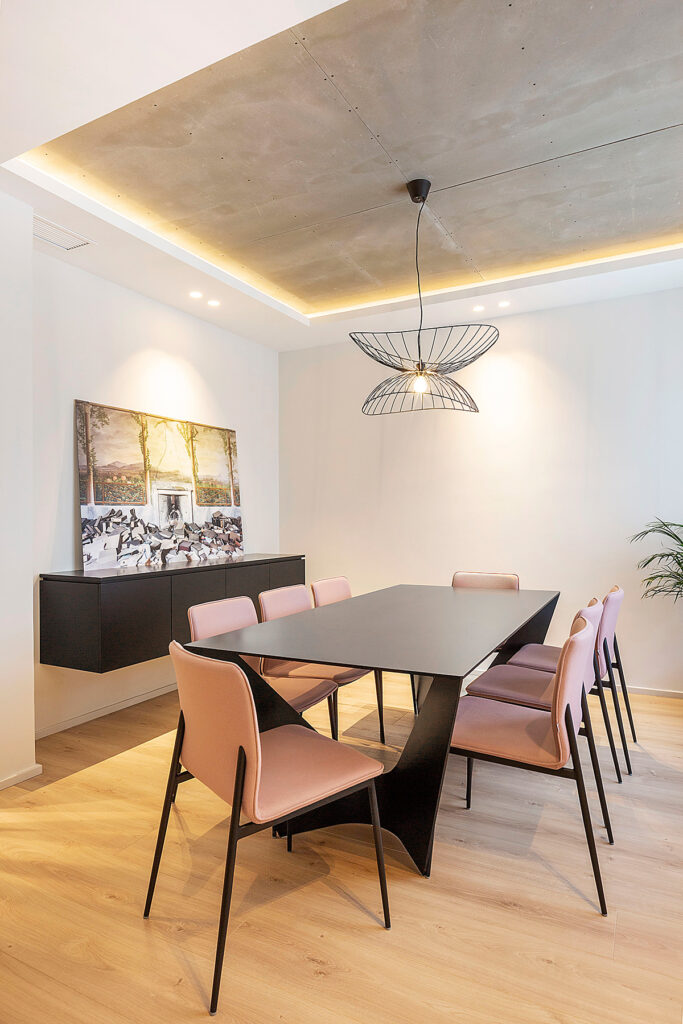
Another very influential factor in the balance of a project is the materials we use and how we treat them. We consider our style simple and neutral, where the combination of materials, textures, and light plays a leading role. We generally like noble materials: natural woods, stones... and we try to combine them with papers, fabrics, textures, or other decorative elements that give warmth to the space.
What details do you consider essential for creating unique and well-designed spaces?
In the studio, we really like to approach projects as blank canvases on which to create works of art. Generally, to achieve this, we make the architecture, the foundation of the project, the "box," very neutral. Walls, floors, noble and easily combinable materials so that it becomes a personal object, a decorative object, a painting, a sculpture – whatever gives the project its personality.
And in this way, we give it a lot of versatility, because it's much simpler to change a picture at a given moment than to have to change the material with which you've made a wall or in a living room, for example. It's much simpler to change textile elements than to change a large sofa. It's simpler and more economical, which in the end is always important.
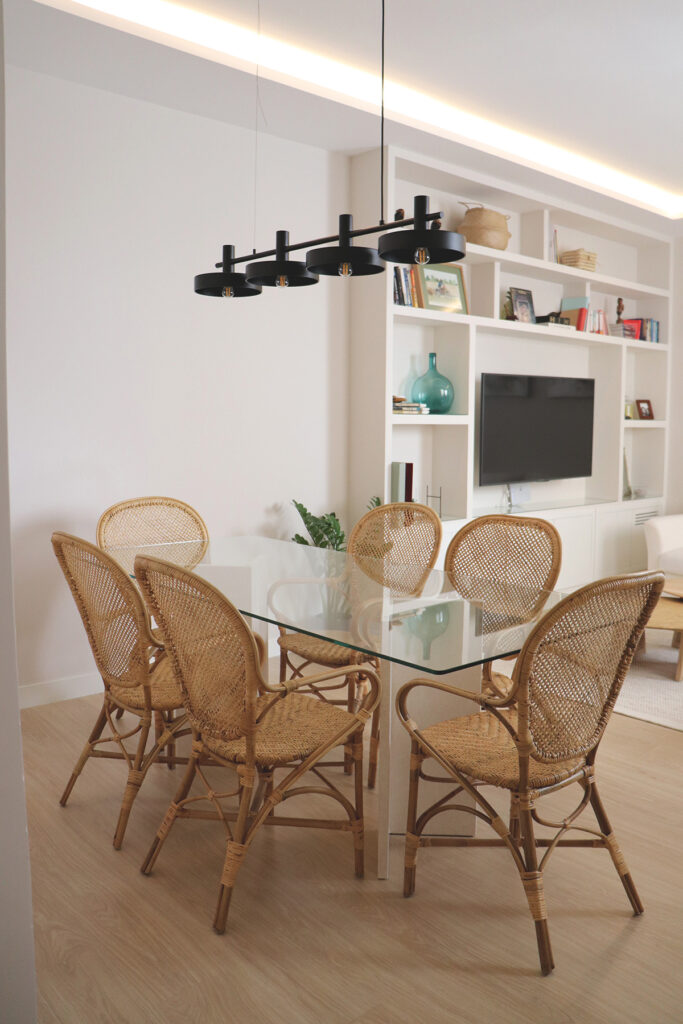
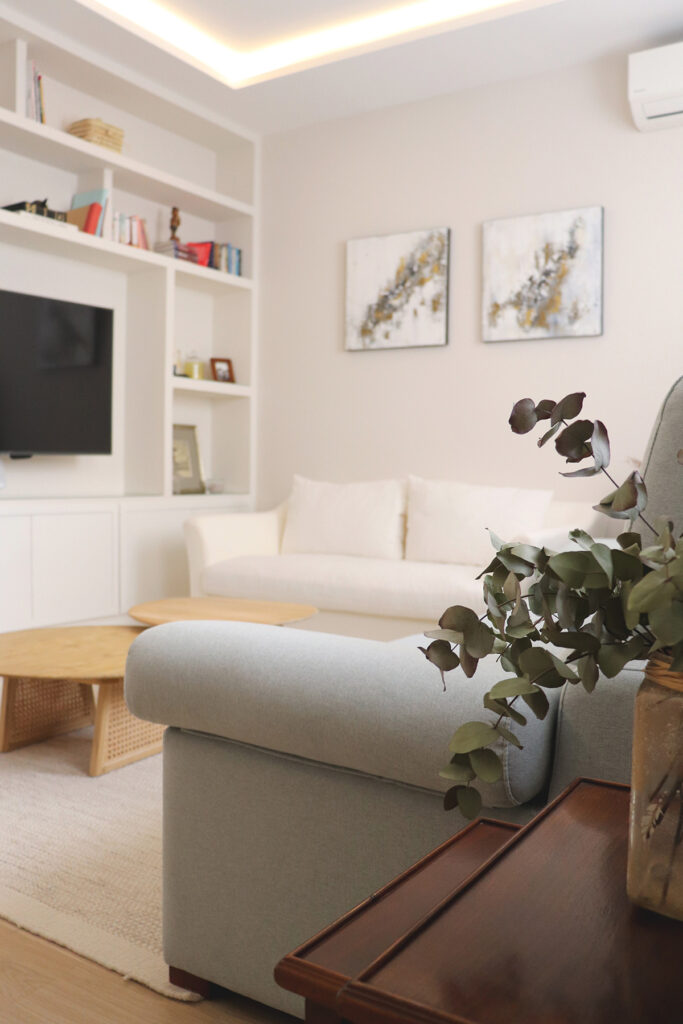
Here are some key tips for maximizing space in any type of room: * **Vertical Storage:** Utilize wall space with shelves, tall bookcases, or wall-mounted cabinets. This draws the eye upward and keeps the floor clear. * **Multi-functional Furniture:** Opt for pieces that serve more than one purpose. Think ottomans with storage, sofa beds, nesting tables, or a desk that can be folded away. * **Smart Layout:** Arrange furniture in a way that facilitates movement and doesn't block natural light or doorways. Consider floating furniture away from walls to create a sense of depth. * **Declutter Regularly:** The most effective way to have more space is to own less. Regularly go through your belongings and get rid of anything you don't need or use. * **Mirrors:** Strategically placed mirrors can create the illusion of a larger and brighter space by reflecting light and the room itself. * **Light Colors:** Lighter paint colors on walls and ceilings can make a room feel more open and airy. * **Hidden Storage Solutions:** Utilize under-bed storage, storage baskets, and decorative boxes to conceal items and keep surfaces clutter-free. * **Wall-Mounted Fixtures:** Consider wall-mounted lighting, televisions, and even bedside tables to free up floor space. * **Divide and Conquer:** For larger rooms, consider using room dividers, screens, or strategically placed furniture to create distinct zones, making the space feel more organized and functional. * **Choose Appropriately Sized Furniture:** Avoid oversized furniture that can overwhelm a small room. Opt for pieces that are proportionate to the scale of the space.
The keys to making the most of space, I would say, are to furnish and decorate according to the size of the room. For example, in a small space, use furniture that isn't too large and, above all, don't try to fill the space so it doesn't look cluttered, because that will give us the feeling of having a much larger space than we actually have.
And I'd say the same for large spaces: use furniture that fits the space you have, put a large sofa or a large bed with large auxiliary furniture. Because if we use small furniture, we'll have to use a lot of it to fill the space, and it will look a bit cluttered. So I'd say the key is to use furniture that fits the size we have.
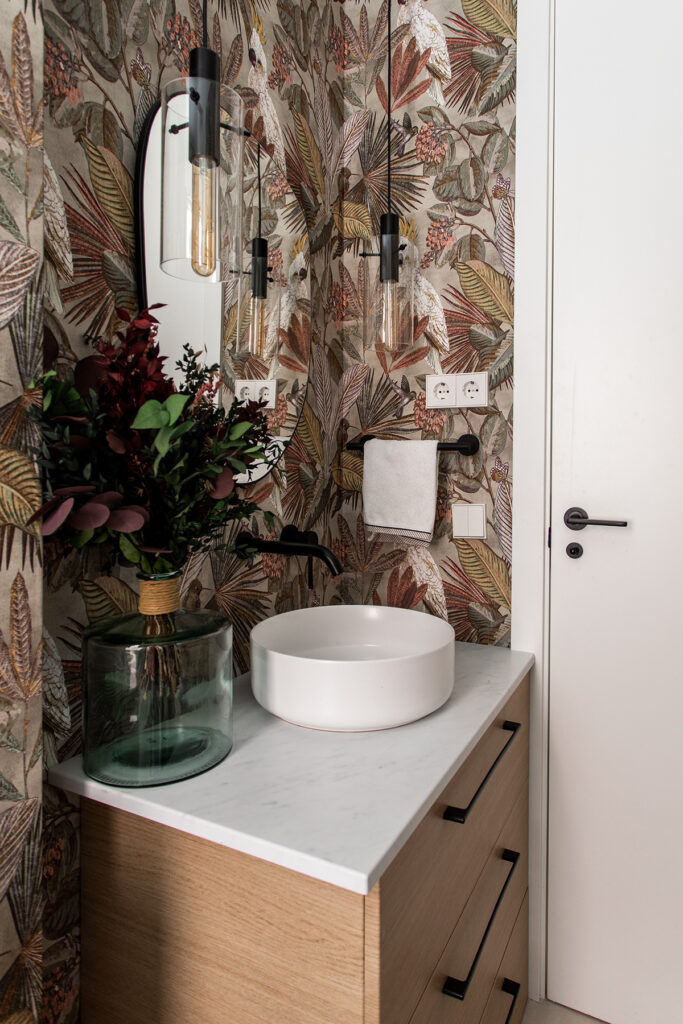
Matte circular sink 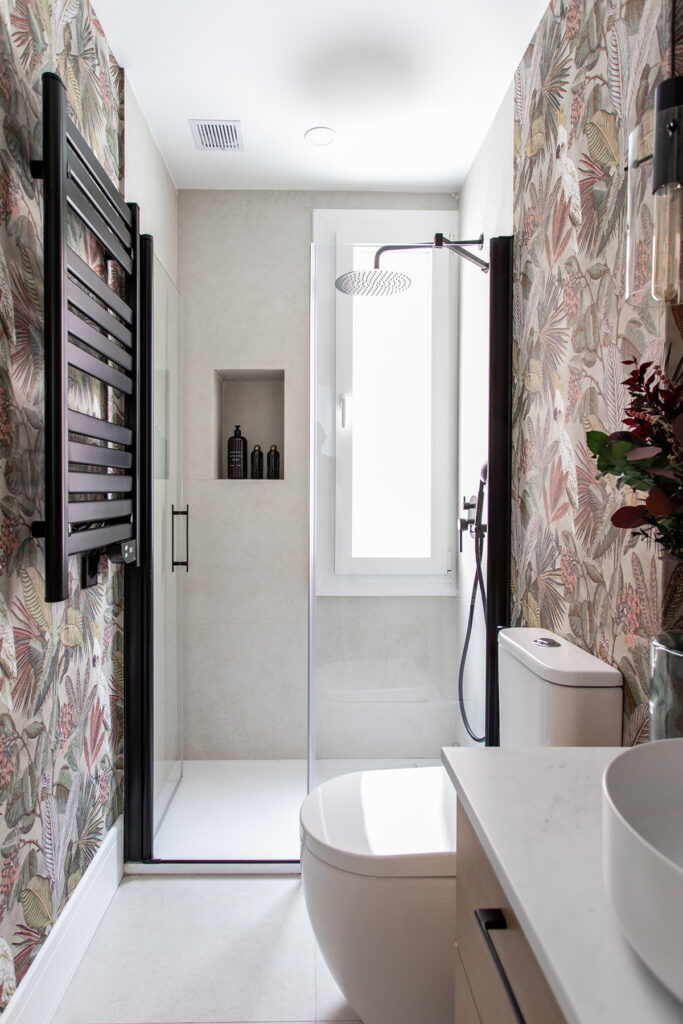
We design furniture and decorative elements. How would you define your style? What characteristics are prioritized in these elements?.
Ever since I started studying, I was always told that it was important to have your own style, one that could be recognized, so that people would see a design of yours and identify you with it. That they recognize that design as yours. And we always try to maintain that style in all our designs.
While it's true that there are times when it's complicated, as you have to adapt to the client's tastes. But it's true that we always try to guide them towards a style that is more akin to ours and that could be defined as timeless, since we like pieces that remain over time and a fairly neutral style, so that it's a piece you can put in one home or another and it doesn't clash.
In several of your projects, you work with Bathco. How would you define the brand? Why do you choose their products for your projects?
We really enjoy working with Bathco, as we consider it a brand that offers many options in terms of both product materials and styles, and in terms of quality and price, it has a lot of competition. Furthermore, there's something that is highly valued nowadays, and that is that their lead times are very, very good.
