


Marble flooding
TipsWe no longer know if marble is a simple trend or an obligatory “must-have” in any architecture, interior design, or decoration project. The fact is that if we look at what's being done in recent months, we see marbled surfaces wherever we look.
If the goal is to achieve spaces with profound elegance that stand the test of time, marble is undoubtedly a good choice. It is a material with a strong presence and becomes the focus of all attention. Furthermore, it transcends trends, adapts to any era, and coexists with any fashion that emerges.
not only the material itself, but other coatings imitate its characteristic grain, more or less pronounced and in different color combinations, allowing it to be applied to any surface.
Porcelain sinks with marble effect
We no longer just see marble on walls, countertops, and decorative details. Now it's also present in almost any cladding, lending elegance to spaces. This is due to the emergence of new materials like quartz and synthetic resins, as well as the possibilities offered by ceramics with new finishes that incredibly imitate marble.
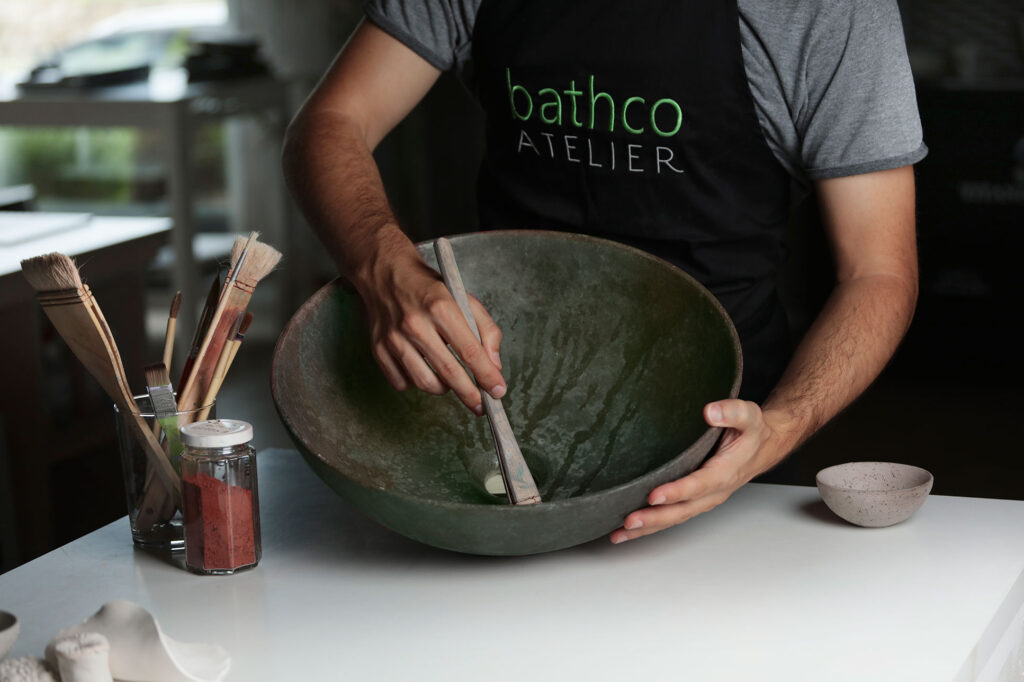
The artists at Atelier de Bathco are passionate about this material, which is why they have chosen to incorporate it into their hand-painted pieces. They use porcelain sinks as their canvas and employ enamels like oil paints, creating backgrounds rich in nuances and veins that mimic its harmonious forms. The matte finish of the surface brings us closer to the elegance of the raw, unpolished material.
Four models serve as examples to show the work that the artists do in the Cantabrian company's workshop.
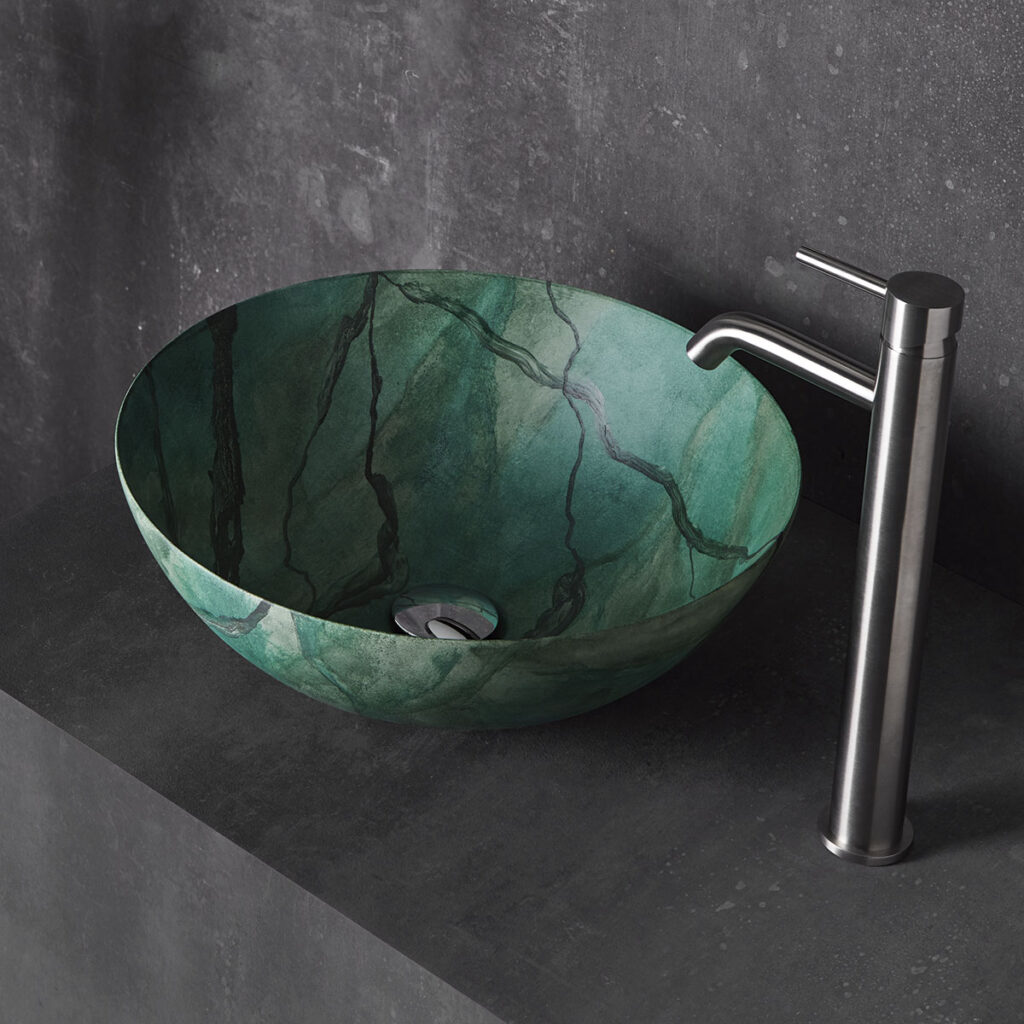

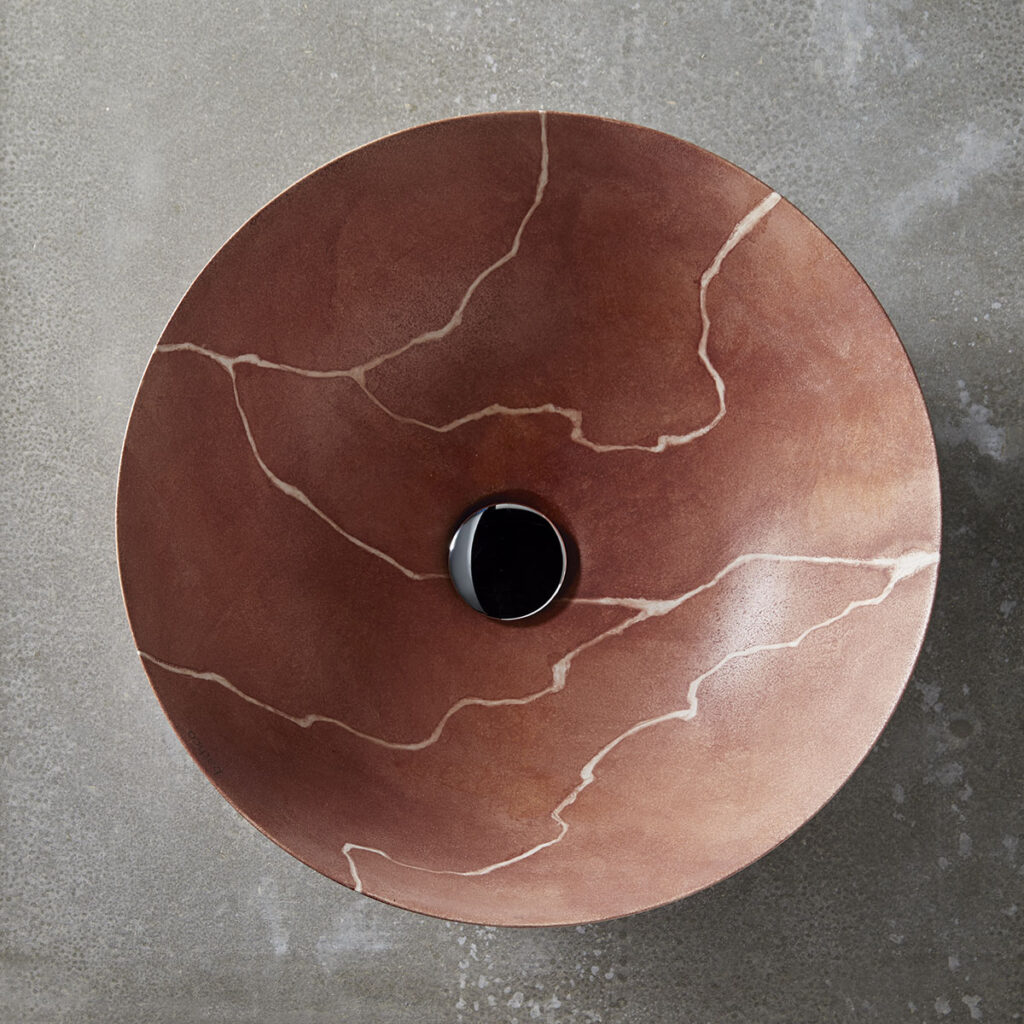
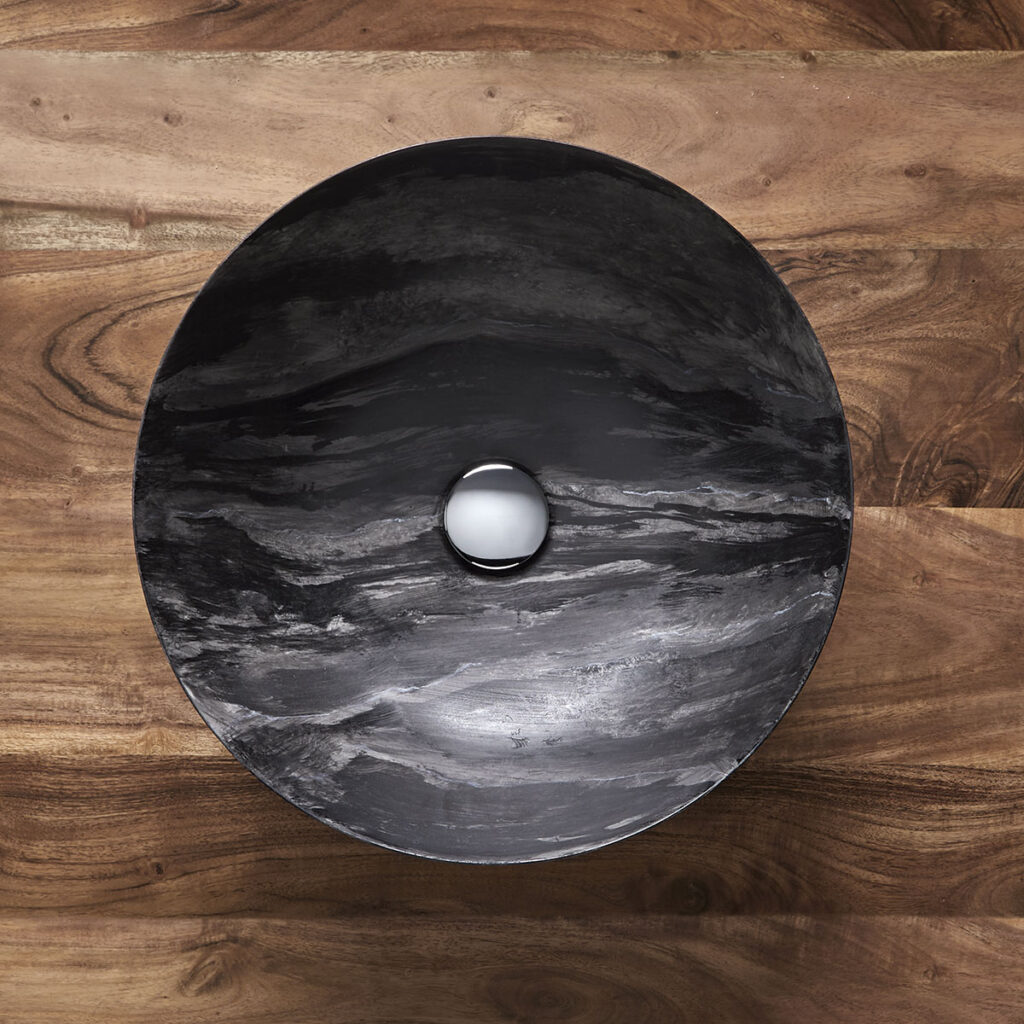
The variety of shades in which marbled finishes are presented offers many decorative possibilities. Below we show you some examples that can serve to spark ideas and apply them to your own projects.
White surfaces
If white has one thing, it's that it allows the rest of the colors to stand out, and the marble effect was not going to be an exception. The gray or black veins stand out, updating its more classic side and fitting into contemporary environments. As an example, we can see it in this bathroom created by Noé Prades for Ale Samaniego's private residence. The marble countertop is placed on a wooden cabinet with rattan doors, and there we see the Solid Surface Belted Sink on a front with a tiled area and painted in dusty pink.
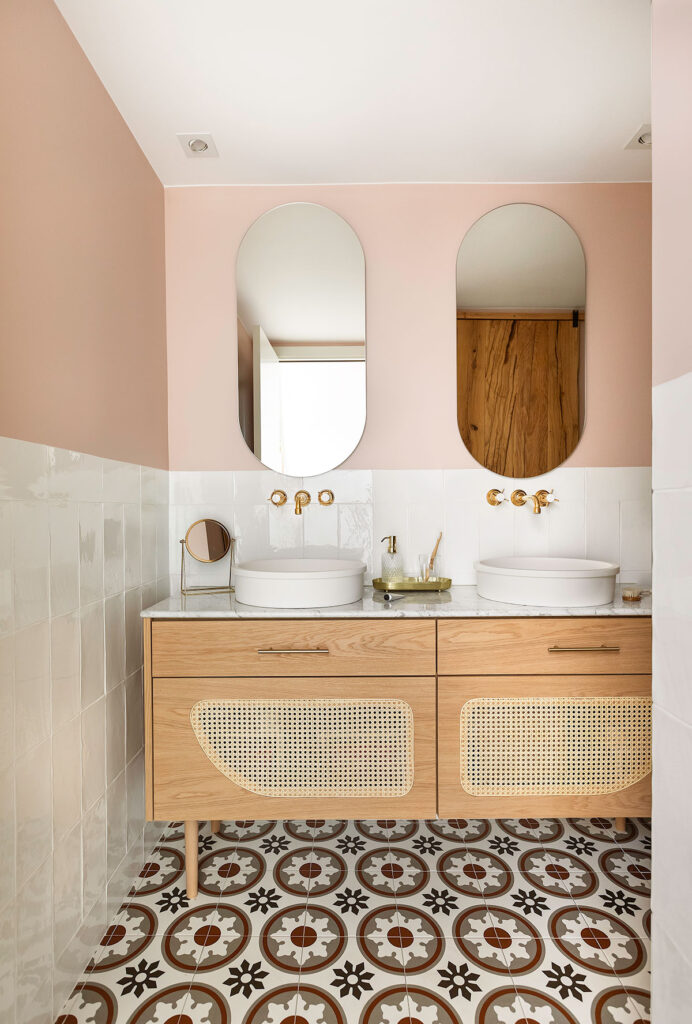
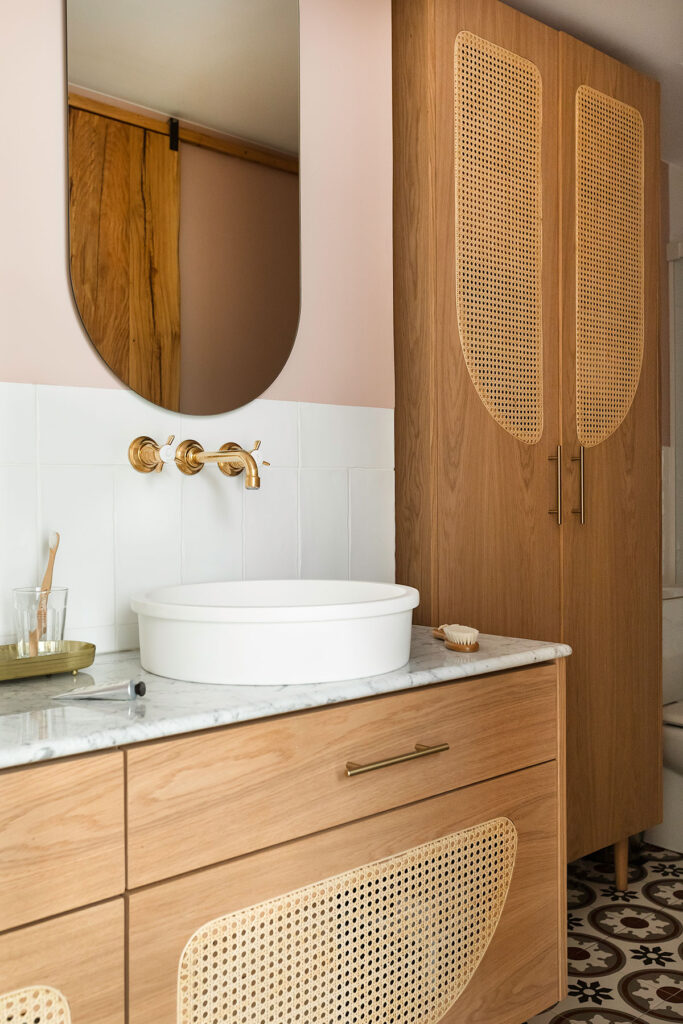
Photo: Elton Rocha
We see the white option again in this Hotel Corona de Castilla Bathroom in Burgos created by Erico Navazo with Two Volta sinks. But in this case, it serves to provide luminosity in an area where the wall and floor motifs take center stage.
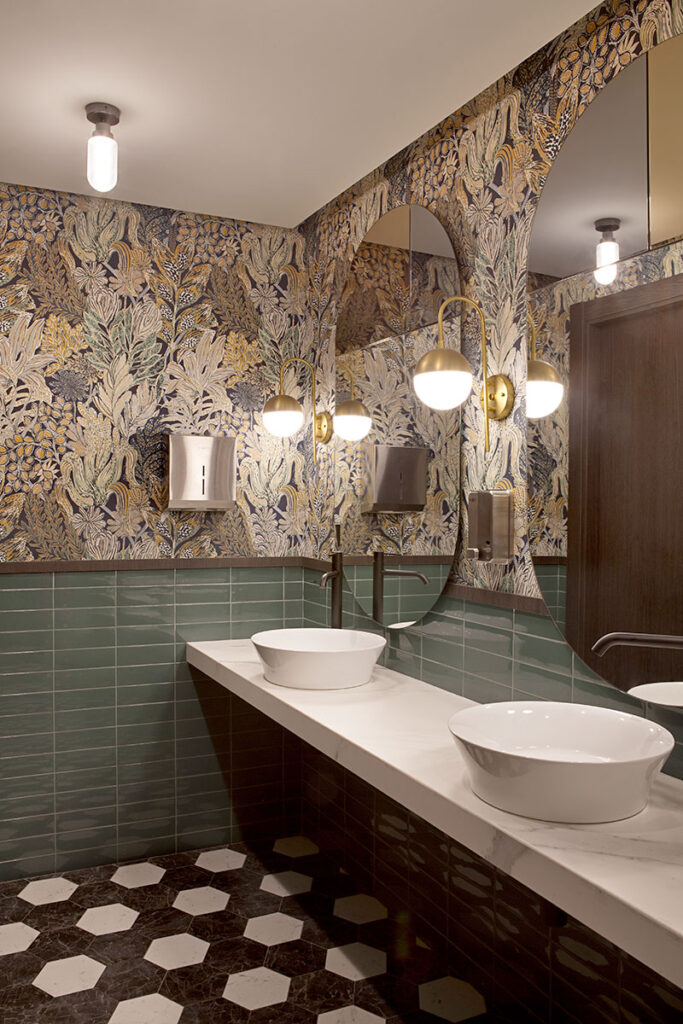
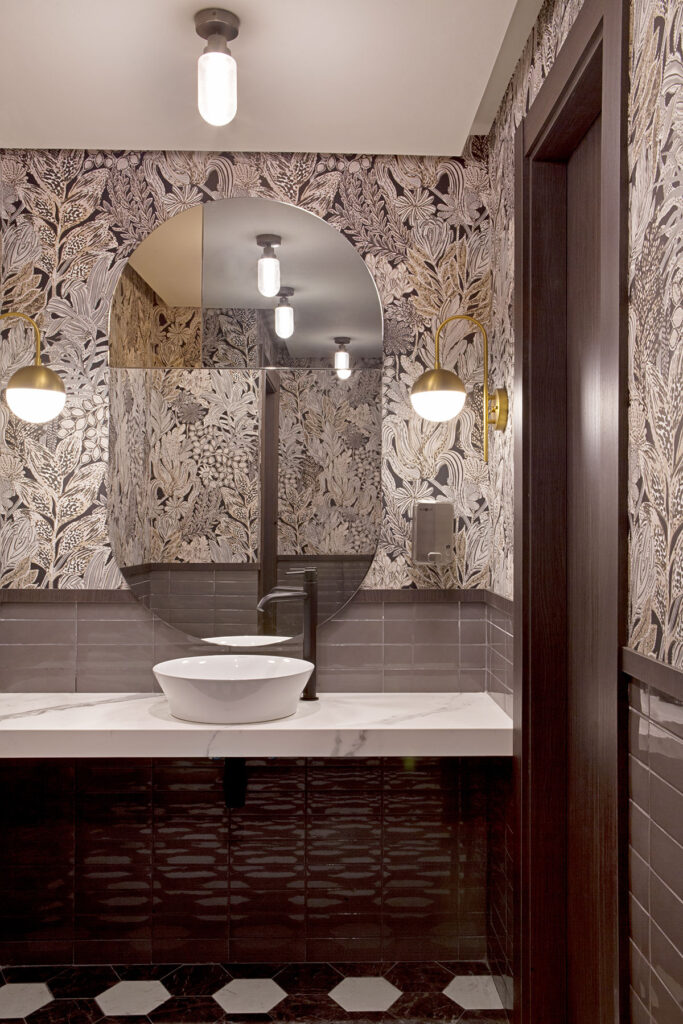
The interior design studio Aedificare It also opts for brightening the sink area using white. On the white countertop with very subtle veining, it places the Bathco sink in this apartment in Santander.

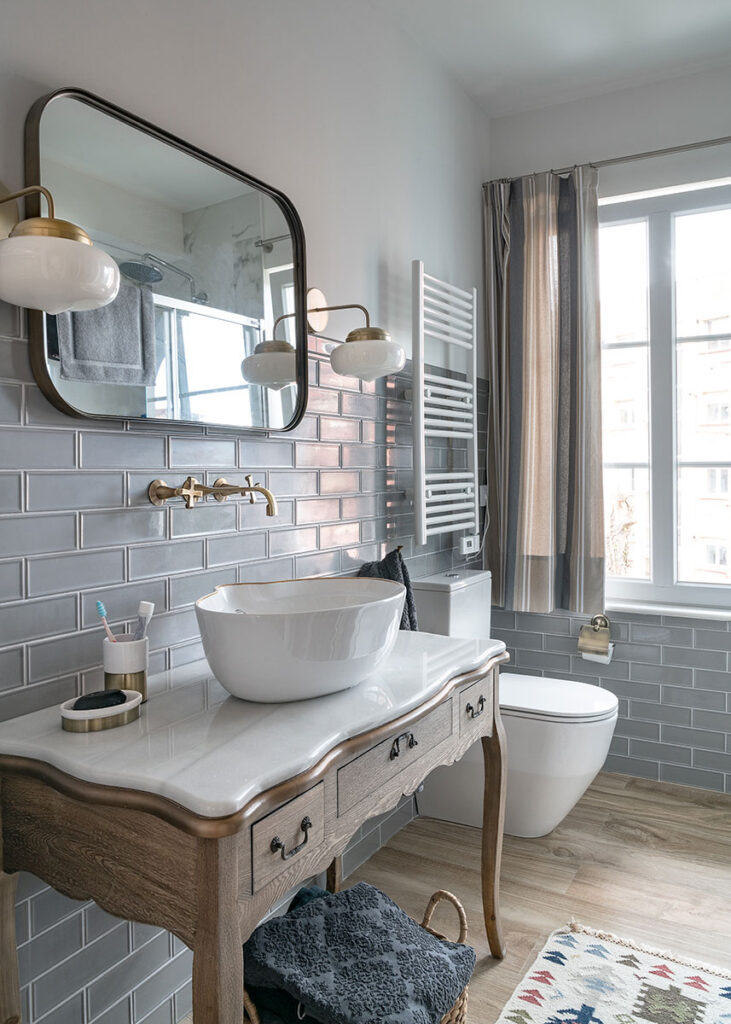
Again use this resource by recovering an old table and placing the model. Second Class Titanic.
Black surfaces
Black is a symbol of luxury, exclusivity, and elegance, and this is evident when marble is used in combination with watery patterns, grayish veins, and discreet details. Below are examples of how it adds light to light-colored walls.
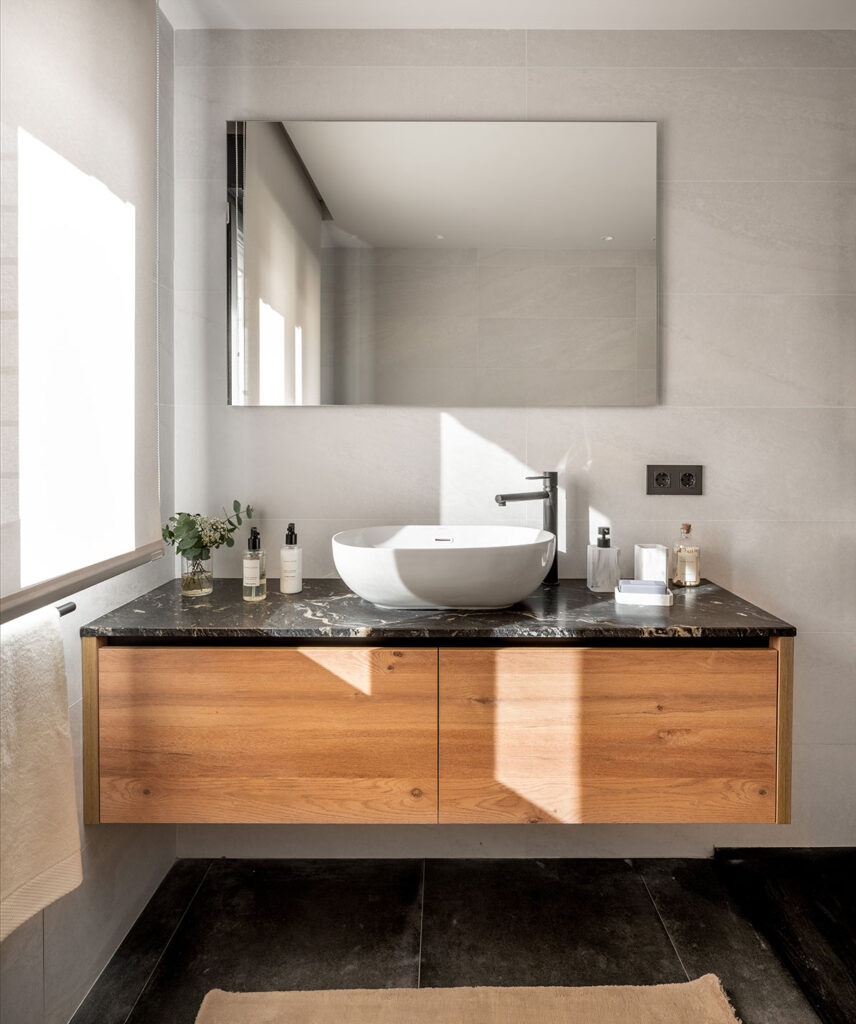
Aude Studio uses this combination in its project “Mirador Galea” in Santurtzi (Bilbao) Where do we find the Livorno sink on a black countertop with white veins placed on a wooden cabinet?.
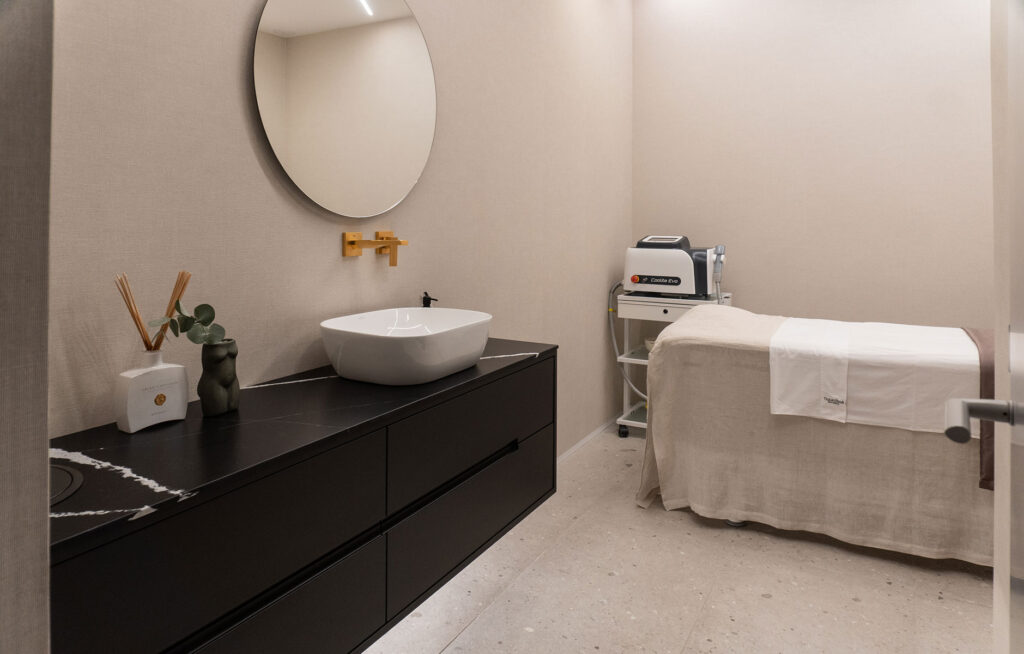
We also see it at the beauty salon Inmaculada Manzano created by Juka Interior Design. In this case, the veined countertop is installed on a black suspended vanity unit, as we could see in “Decorating tips for a beauty space.
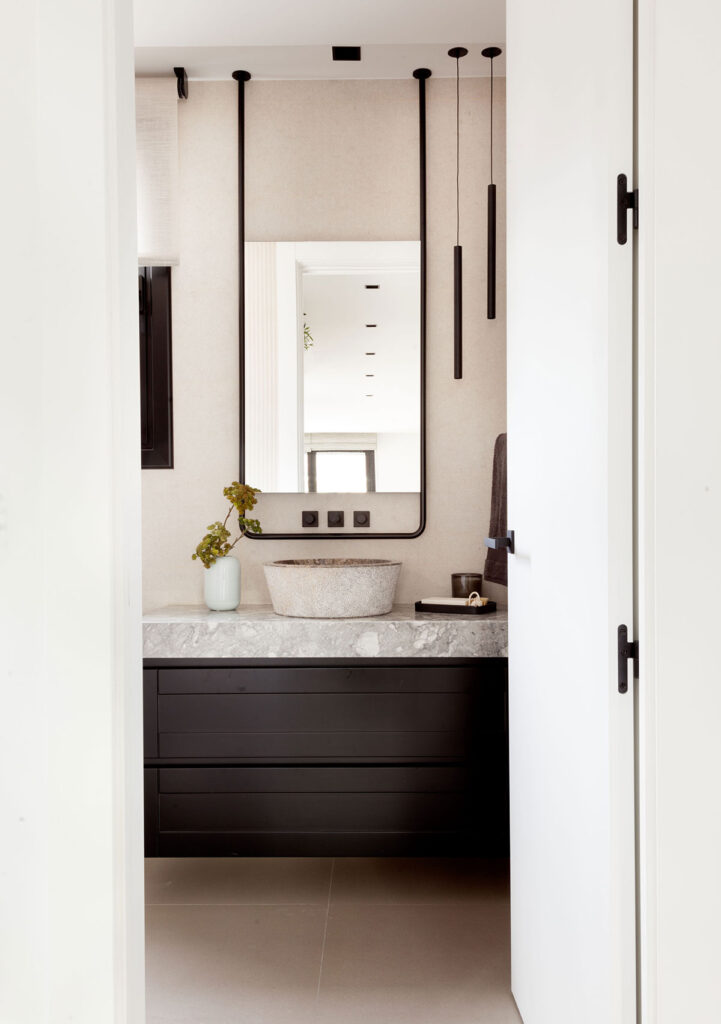
With more subtle veins, we see the countertop installed in the hotel room bathrooms Hotel Yurbban Passage where is it seen Novales cement sink.

Gray surfaces
Between black and white, there is a wide range of grays that can be a rich resource for bathrooms. This is what we can see in this Natalia Zubizarreta's home where a robust grey countertop has been placed, on which the Dual stone sink.
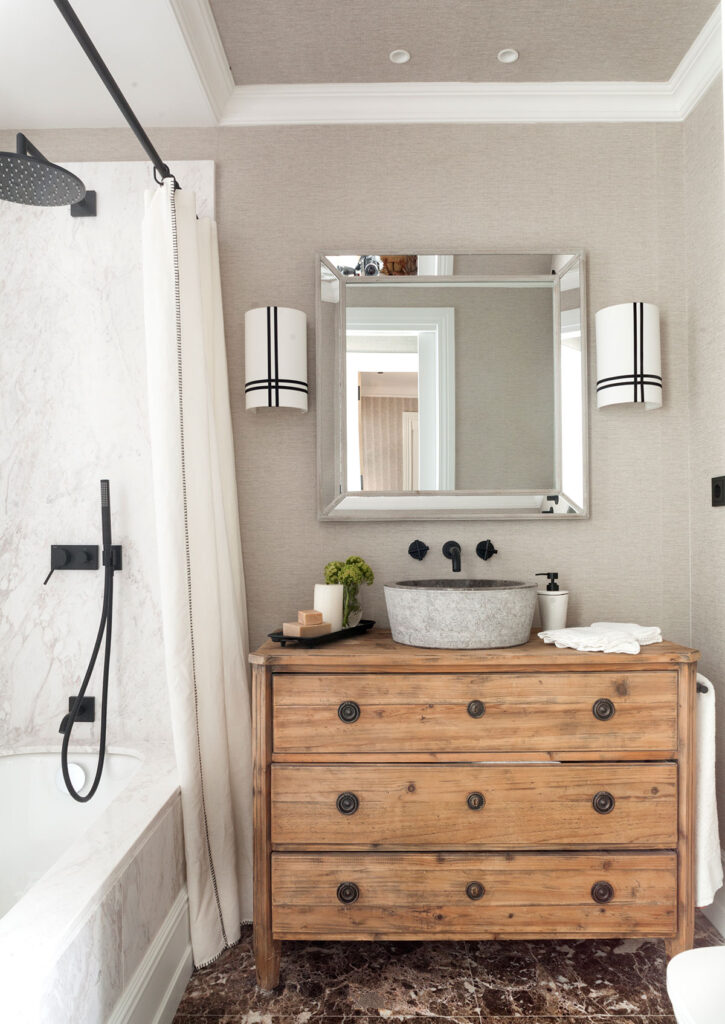
But marble isn't always present on the countertop, as it sometimes extends all the way to the shower, like another bathroom by the same interior designer. Here it plays with positive-negative in the shower and bathtub area of the bathroom. One wall is predominantly a light background with gray veining, and the floor and front wall feature the opposite combination. This way, the freestanding bathtub is framed and stands out.
Photos: Felipe Scheffel