


Mood board, a useful tool
TrendsThe world of construction and renovation is characterized by its creativity. Architects, interior designers, and decorators are among the most creative professions. Therefore, they need tools to bring to life the ideas generated by minds that never stop creating concepts and spaces.
There are many factors to consider when launching a new project: new layout, searching for materials, choosing colors, etc., and all of that needs to be put down on paper to clarify ideas and to establish priorities, tastes, and needs.
To organize all of that, one of the tools that is becoming indispensable for starting any project, whether professional or personal, arises: the mood board or inspiration board.This allows you to tackle the renovation or new construction from a much clearer perspective.
To do it, you just have to follow the four steps of any creative process:
Questioning and preparation
If you've decided to start a new project, it's because a real need has arisen, whether it's your own personal need or a client's, and a solution must be found. This is when the rational and intuitive parts combine and a brainstorming session emerges, which can be a bit overwhelming, and if not, just ask Patricia Bustos. This is because there is so much inspiration with very diverse ideas that apparently have no order and you don't know how to focus.
Tip #1: Think about everything you like and find photographs or samples to place them all together, whether physical or digital, in a logical and organized way.
Gudy Herder from Eclectic Trends is an expert in this technique and a teacher at Mood Board Academy and states that “Most people start creating mood boards right away without planning the message they want to convey”and advises “Create a mind map of your project before starting with a haptic or tactile mood board process.”. On their Instagram profile, you'll find endless inspiring ideas as well as access to courses that will teach you how to create the best mood boards.
A mood board should include a variety of elements that visually represent the overall feeling or aesthetic you want to achieve. This can include: * **Images:** Photos of landscapes, people, objects, textures, patterns, or anything that evokes the desired mood. * **Color Palette:** Swatches or examples of colors that will be used. * **Typography:** Examples of fonts that align with the mood. * **Textures:** Samples of materials like fabric, paper, wood, or metal to convey a tactile feel. * **Keywords/Phrases:** Words or short sentences that describe the mood or concept. * **Inspirational Objects:** Small items that represent the theme, like a ticket stub, a found leaf, or an abstract shape. * **Illustrations/Sketches:** Hand-drawn elements that add a personal touch or specific visual ideas. The key is to curate a collection of elements that work together harmoniously to communicate a specific feeling, style, or concept.
- Color palette of predominant colors
- Inspirational images showing a general sense of the space's concept
- Material samples to be used as fabrics, wallpaper, paint, ceramic tiles, flooring, etc.
- Photographs of furniture and decorative elements
- Elements that have inspired you
- Floor plan of the space
It's very interesting to have a mood board for each design project to reflect its essence, establish the style, and the overall feeling you want to convey at a glance..
Erika Suberviola
Incubation and illumination
Once the ideas are organized, one reflects on each concept and assimilates the knowledge. Without haste, and allowing time to organize one's thoughts. This is how information is processed until a moment arrives when thought can be directed straight towards the problem.
Tip #2: Once you have made a selection of all references and kept what you want to apply to the new project, choose the medium on which you want to create the mood board – physical or digital. You can use a corkboard, any table, or a simple PowerPoint or Google Slides presentation, for example, or if you have knowledge of editing programs, you can use Photoshop or InDesign, which can be very useful.
Erika Suberviola tells us that «In the studio, we usually create them in two ways. One is in person (photo 1), where we display all the samples that will make up the project on a solid surface so the client can see up close the colors, textures, and finishes of the pieces that will be part of their future design; or digitally (photo 2), which uses images to help visualize the spatial layout more quickly without having to create a 3D model«.
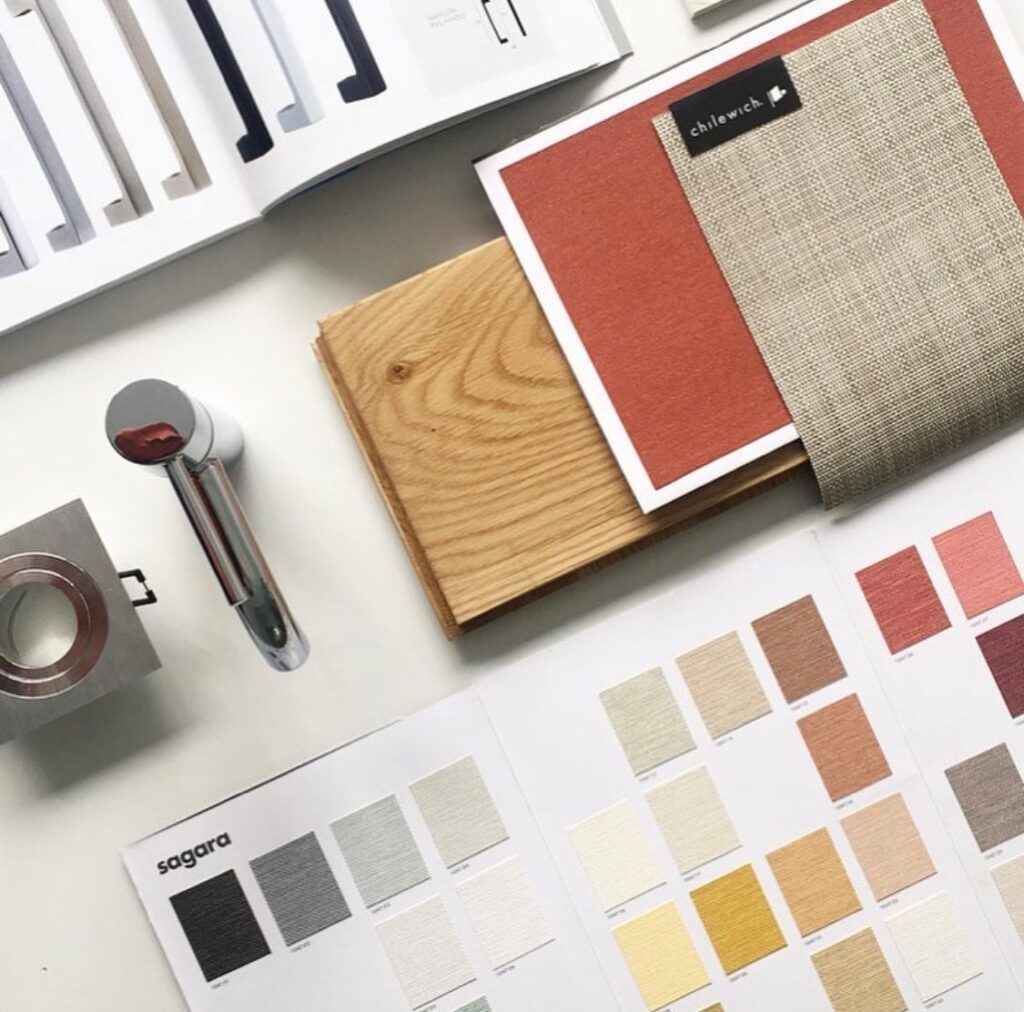
Moodboard 1 – Erika Suberviola 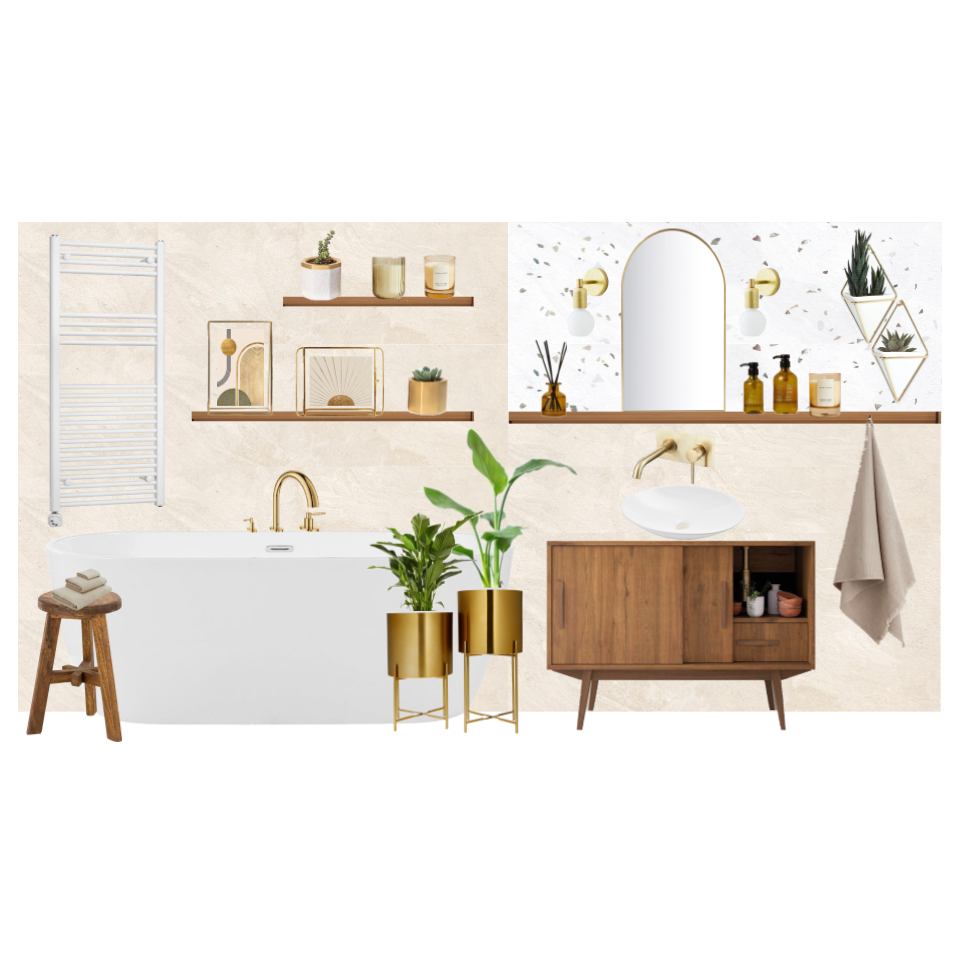
Moodboard 2 - Erika Suberviola
Logical verification or formulation
At this point, it's time to return to the more rational part and be critical of the idea that has emerged to consider its practicality. Many times we have an idea in our head, but when it comes to implementing it, it's not feasible due to the uniqueness of the space, lack of resources, or other issues. It can be very useful to ask ourselves some questions such as: Does it really address the problem posed? Is its application realistic? Is it applicable considering the resources you have available?.
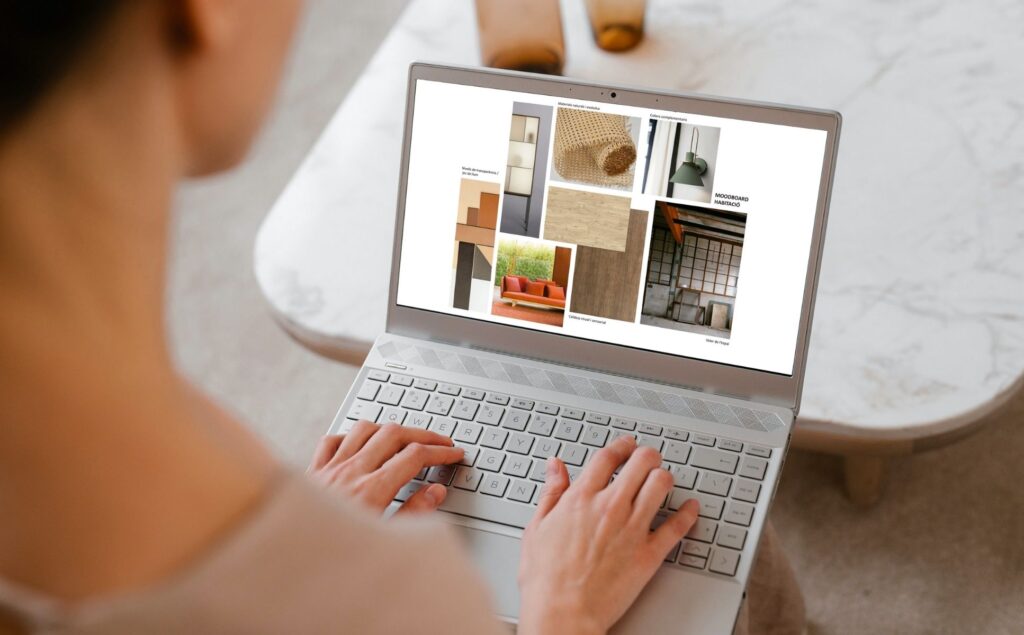
Tip #3: Take a look at the references you've included on your mood board and consider whether they're truly relevant to your project. This will help you clarify your vision and make it easier to choose the right elements—all in a simple and fun way. Keep in mind that it’s important to stay on top of trends without neglecting real needs.
Adaptation and dissemination
The time has come to project and visualize what the real space will be. At this moment, the need arises to convey this to the client and the various stakeholders who will be involved in the project: builders, architects, interior designers, etc.
Tip #4: If you are a professional, organizing your ideas will help you communicate the project better to your clients. Therefore, ensure that every detail is captured so that you can convey the complete concept. This will lead to making certain modifications and adaptations to the original process or service, which will result in a better adaptation to market needs.
In summary, visualizing how a project will turn out is complicated, and mood boards have become the quickest, cheapest, and most powerful tool that interior design professionals have to gain clarity.