The Titanic Collection by Bathco is presented for the first time at a trade show.
Cevisama 2016 has been the stage where the reproduction of the first and second-class bathrooms of the ship of dreams was presented internationally.
Journal
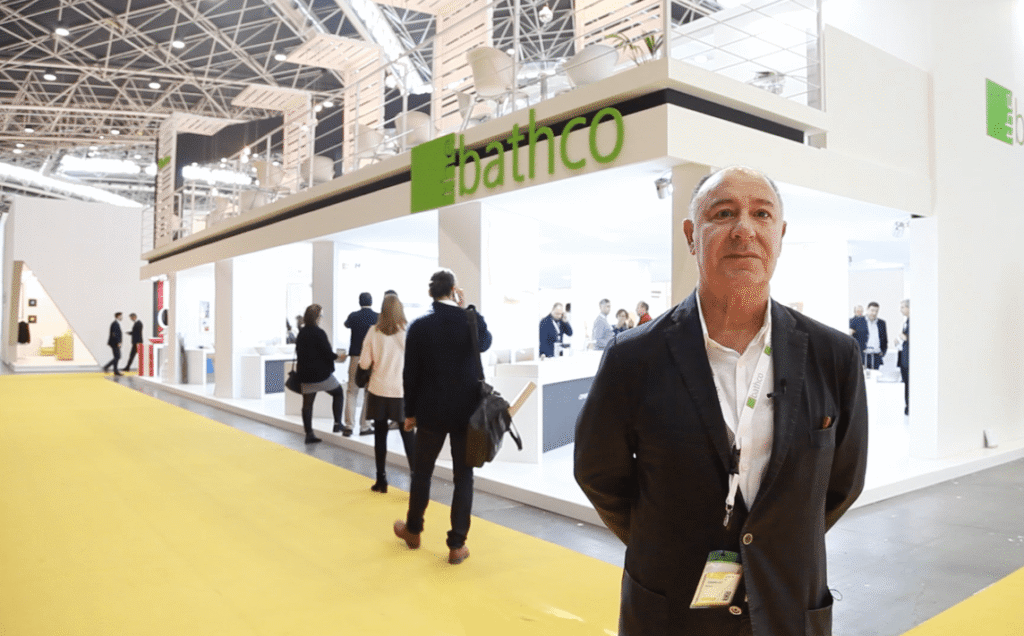
Today, the reproduction of the Titanic's bathrooms was presented for the first time at a trade show, at the Bathco stand in Cevisama (N3 P2 A66).
Cevisama 2016, as a meeting point for companies in the bathroom sector, has witnessed the work developed by Bathco to achieve these reproductions. The company's team has worked for months to obtain designs faithful to the original pieces while adapting them to current design, utility, and proportions. In fact, the washbasins designed in 1912 did not have drains; the mechanism was very simple: once used, the dirty water was simply dumped out. Additionally, the furniture did not maintain the same proportions as current pieces due to differences in average height. At Bathco, a drain has been adapted to the washbasins so they can be installed in any space, and the furniture is now proportional to today's average height.
Bathco and the Titanic Foundation
In July 2015, the Titanic Foundation decided, for its new exhibition Titanic: The Reconstruction, reproduce, among other areas of the ship, the first and second-class cabins, highlighting the bathrooms: mahogany furniture, sinks, faucets, bathrobes, and towel sets.
For the full-scale reproduction of these important Titanic rooms, Bathco was selected as one of the most outstanding companies in the bathroom sector. Thus, the exhibition offers a complete picture of what the construction of the best floating hotel in the world meant.
Just as the foundation does with all the reproductions that are part of the exhibition under the name Titanic Collection, has also wanted to present these reproductions in a reference location, in this case, Cevisama has been chosen as a reference point for the bathroom sector.
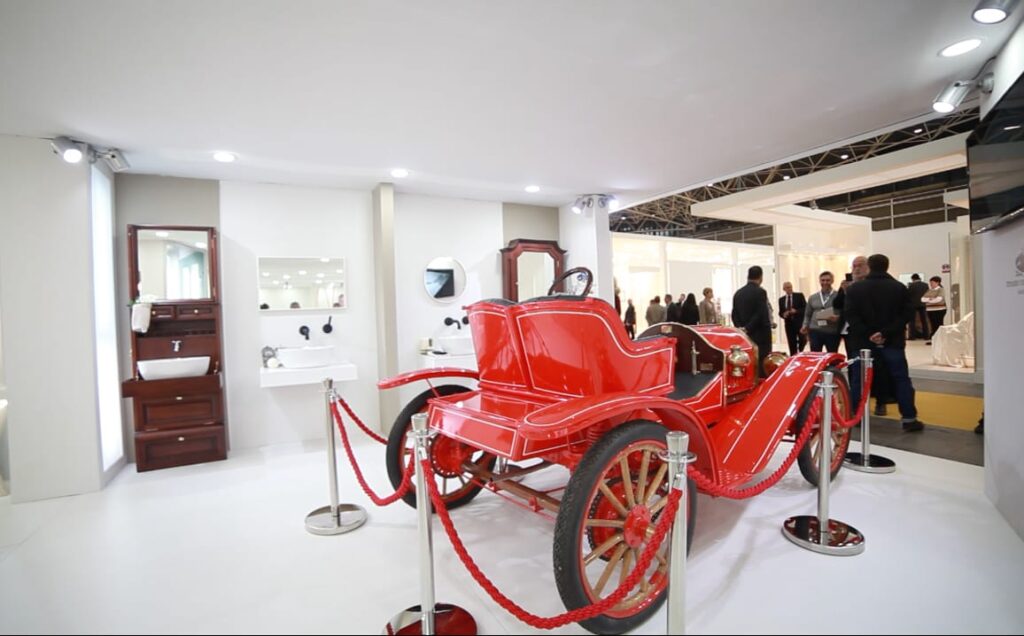
To accompany this act, a very special piece that is part of the exhibition was present. Titanic Collection by Bathco. It is the story of the Brush Runabout D24, better known as the Titanic's car; a car that, however, never made it onto the White Star Line's impressive unsinkable ship, as is obvious, since if it had embarked, it would hardly be in one piece in the 21st century. It is one of the oldest vehicles still in working order. More information about the vehicle here.
A titanic project
On March 31, 1909, the Harland and Wolff shipyard in Belfast was the site where the world's largest ship at the time was built, which would travel the route between Southampton and New York.
William Pirrie, managing director of Harland and Wolff, naval architect Thomas Andrews, and Alexander Carlisle, general manager of the shipyard were the designers of an ambitious, never-before-seen project that created great excitement among the 2223 passengers who boarded.
On April 10, 1912, the R.M.S. Titanic set sail from Southampton, made port calls in Cherbourg (France) and Queenstown (now Cobh) in Ireland, before heading for the Atlantic Ocean. Four days after departing and approximately 600 km south of Newfoundland, the ship of dreams struck an iceberg, causing what we now call the most sensational shipwreck in history.
History turned into opportunity
The sinking of the ship was a tragedy that we continue to remember more than a century later, but it motivated the implementation of important improvements in maritime safety and the creation in 1914 of the International Convention for the Safety of Life at Sea.
Many people and institutions work daily to keep this history alive, such as the Titanic Foundation, which was founded in 2006 with the main goal of managing and promoting the historical, maritime, and human memory of the most famous shipwreck and the most legendary vessel in universal history: the R.M.S. Titanic, which, more than a hundred years after its sinking, continues to be a legend.